
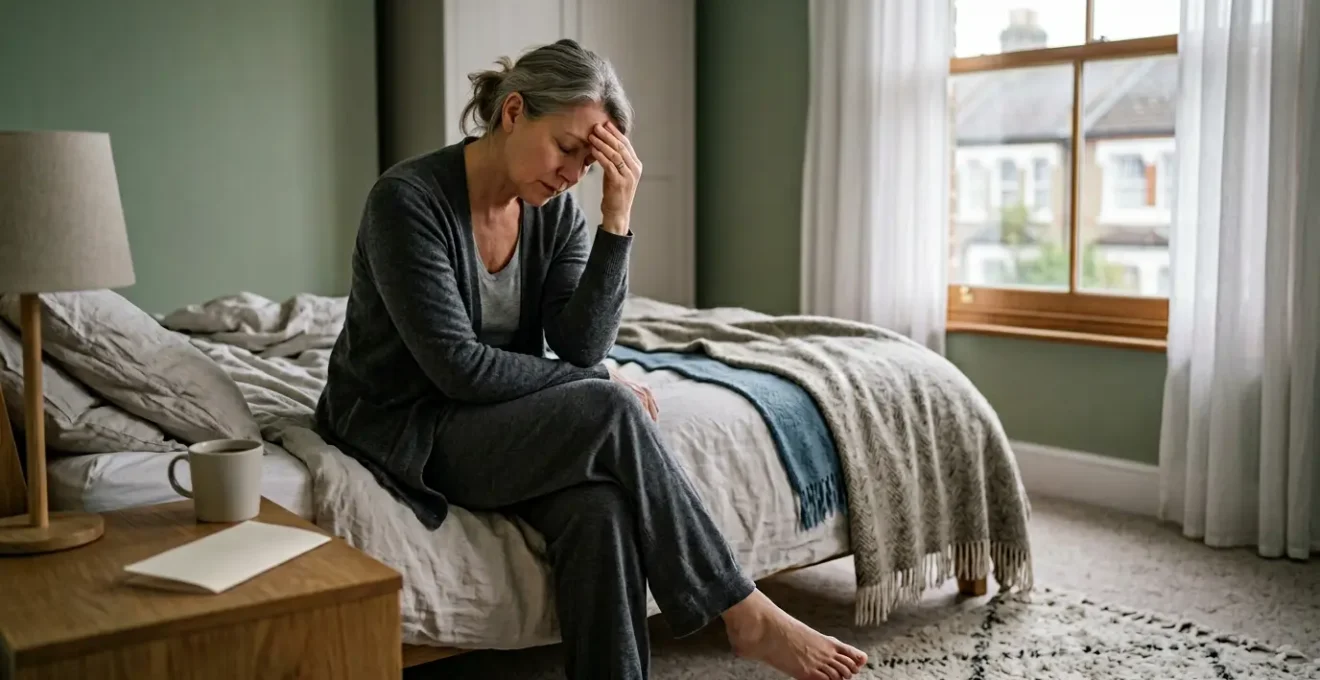
Lingering fatigue after an illness isn’t a sign of weakness; it’s often a direct physiological consequence of unresolved viral disruption within your body.
- Viral fragments can remain dormant in your tissues, leading to low-grade inflammation and immune system strain long after you feel “better”.
- Gentle, consistent movement is more effective for recovery than complete bed rest because it actively supports your body’s waste-clearance (lymphatic) system.
Recommendation: Shift your focus from passively waiting to get better to actively supporting your body’s specific recovery needs through targeted nutrition, strategic rest, and gentle movement.
It’s a feeling many in the UK know all too well. You get a cold, the flu, or another virus. You go through the fever, the aches, and the cough, and then… you just don’t bounce back. Weeks, sometimes months later, a profound fatigue lingers. You’re told to “get more rest” or that “it just takes time,” but the exhaustion feels deeper, more cellular. This isn’t just being tired; it’s the sensation that your body’s energy reserves have been fundamentally depleted, a condition increasingly recognised as post-viral fatigue.
The common advice, while well-intentioned, often misses the root of the problem. It assumes recovery is a passive process of waiting. But what if the key to breaking the cycle isn’t just waiting, but actively understanding and addressing the specific physiological echoes the virus left behind? The reality is that your body may still be fighting a low-grade battle on multiple fronts, from hidden viral reservoirs in your tissue to a disrupted gut microbiome struggling to support your immune function.
This guide moves beyond the platitudes. We will explore the hidden reasons why some viruses seem to overstay their welcome and why your body feels stuck in a low-power mode. By understanding the underlying mechanics—from how to eat during a fever to the critical role of your lymphatic system—you can shift from being a passive patient to an active participant in your own recovery. We will provide a clear, science-backed roadmap to help you reclaim your energy and build a more resilient immune system for the future.
To navigate this complex topic, this article is structured to answer your most pressing questions. We’ll delve into the science of viral persistence, the nuances of rest versus activity, and practical strategies for supporting your body’s recovery from the inside out.
Summary: A Guide to Understanding and Overcoming Post-Viral Fatigue in the UK
- Why Do Some Viruses Hide in Your Tissue Long After Symptoms Fade?
- How to Eat When You Have a Fever to Shorten Infection Time?
- Bed Rest or Light Walks: Which Actually Helps You Recover Faster?
- The Training Mistake That Turns a Cold into Myocarditis
- How to Ventilate a UK Bedroom to Stop the Whole Family Getting Sick?
- Why Does One Course of Antibiotics Disrupt Your Gut for up to 12 Months?
- Walking or Massage Gun: Which Is More Effective for Flushing Lactic Acid?
- How to Build a Resilient Immune System Before the UK Flu Season Hits?
Why Do Some Viruses Hide in Your Tissue Long After Symptoms Fade?
One of the most frustrating aspects of post-viral fatigue is the feeling that the illness never truly left. This isn’t just a feeling; it’s a documented phenomenon known as viral persistence. Certain viruses, particularly those in the herpes family like Epstein-Barr (EBV) and Cytomegalovirus (CMV), are masters of disguise. After the initial, acute infection, they don’t get fully cleared from the body. Instead, they retreat into a latent or dormant state within your tissues, such as nerve cells or immune cells, effectively hiding from your immune system.
This latency is a survival strategy for the virus. It can lie dormant for years without causing issues. However, periods of physical or psychological stress—like another illness, intense exercise, or significant life events—can trigger its reactivation. This reactivation leads to a renewed, often low-grade, immune response. Your body starts fighting again, consuming energy and producing inflammatory signals that contribute to feelings of fatigue, brain fog, and muscle aches, even without full-blown symptoms of the original illness.
Research confirms this is a sign of a wider issue. The reactivation of these viruses is often considered an indicator of systemic immunodepression. As detailed in the Journal of Applied Physiology, evidence of viral DNA from pathogens like EBV can be found in athletes after even short bursts of high-intensity training, demonstrating how physical stress can compromise the immune system enough to allow these hidden viruses to re-emerge. This creates a vicious cycle: stress weakens immunity, the virus reactivates, causing fatigue, which itself is a form of bodily stress.
How to Eat When You Have a Fever to Shorten Infection Time?
When you have a fever, your body is in a state of high metabolic stress, burning through energy and nutrients to fight off the infection. The old adage “feed a cold, starve a fever” is not only outdated but potentially counterproductive. Proper nutrition during this critical window is essential to provide your immune system with the resources it needs to work efficiently and can help prevent the depletion that leads to prolonged recovery. The focus should be on easily digestible, nutrient-dense foods that support, rather than burden, your system.
This isn’t about forcing down large meals, but about strategic nutritional support. Your body needs building blocks for immune cells and energy to fuel the fight, without diverting significant resources to digestion. According to guidance from UK-based health trusts like the Royal Berkshire NHS, a targeted approach is most effective. This includes prioritizing specific macro and micronutrients that play a direct role in immune function and inflammation control.
As the image above suggests, focusing on natural, whole-food sources of these nutrients is key. A strategic nutritional plan during a fever involves several key actions:
- Focus on easily digestible proteins: Gentle sources like bone broth, collagen peptides, or simple soups help prevent muscle breakdown without taxing your digestive system.
- Include zinc-rich foods with quercetin: Zinc is crucial for immune cell function. Combining it with quercetin (found in onions, apples, and berries) can enhance its absorption into your cells.
- Consume flavonoid-rich foods: Dark berries, and particularly elderberry, contain powerful flavonoids that help modulate the body’s inflammatory response, potentially reducing the severity of symptoms.
- Stay hydrated with electrolytes: Fever causes fluid loss through sweating. Replenishing with water that includes electrolytes (from a pinch of sea salt and a squeeze of lemon, or a purpose-made drink) is more effective than plain water.
- Avoid inflammatory triggers: Sugar, caffeine, and alcohol can all worsen fatigue and interfere with immune function. It’s best to eliminate them completely during and immediately after an illness.
Bed Rest or Light Walks: Which Actually Helps You Recover Faster?
When grappling with post-viral fatigue, the impulse is to succumb to complete bed rest. While rest is undeniably crucial, the type and duration of that rest can make a significant difference. The debate between strict inactivity and gentle movement is central to modern recovery protocols, and the answer lies in understanding how your body clears metabolic waste and inflammation after an infection.
In the initial, acute phase of an illness with fever, absolute rest is paramount. As guidance from the Bristol ME Service (part of the NBT NHS Trust) highlights, this means resting both the body and the mind—minimal screen time, no work, and using relaxation techniques to achieve deep, restorative rest. This allows your body to dedicate 100% of its resources to fighting the pathogen. However, once the acute phase passes and you’re left with lingering fatigue and aches, the strategy needs to shift.
This is where the lymphatic system comes into play. Unlike your circulatory system which has the heart as a pump, your lymphatic system—your body’s primary waste disposal network—is passive. It relies on physical movement to function. As one physiotherapy expert explains:
The Lymphatic System relies on muscular movement and deep breathing, which helps move fluid from the tissues through the Lymphatic system and, therefore, the removal of waste
– Katie Bell Physiotherapy, Lymphatic System Recovery During Long COVID
Prolonged inactivity causes this system to stagnate, allowing inflammatory byproducts and cellular debris to linger in your tissues, contributing to muscle soreness and fatigue. Gentle movement, such as a short, slow walk, acts as a pump for the lymphatic system. It promotes the circulation of lymph fluid, helping to flush out waste products and deliver fresh nutrients to your cells. The key is to stay well below the threshold that causes further exhaustion, a concept known as pacing. A 10-minute slow walk that leaves you feeling the same or slightly better is therapeutic; a 30-minute walk that requires a two-day recovery is counterproductive.
The Training Mistake That Turns a Cold into Myocarditis
For active individuals, taking time off for a cold or flu can feel like a major setback. The temptation to “sweat it out” or return to training as soon as the fever breaks is strong. However, this is one of the most dangerous mistakes you can make during viral recovery. Pushing your body too hard, too soon not only prolongs your illness but also carries the risk of severe complications, including myocarditis—an inflammation of the heart muscle.
When you exercise, you place a controlled stress on your body, including your heart. When your immune system is already working overtime to fight a virus, this additional stress can be overwhelming. The virus can take advantage of this compromised state to travel to and infect the heart muscle. This risk isn’t just theoretical; research on marathon runners shows that athletes who train with a pre-existing infection are significantly more likely to suffer complications. Specifically, 33% of runners with a pre-race infection went on to experience a post-race infection, compared to just 16% of those who were healthy beforehand.
This highlights a critical principle: exercise is a stressor. While it’s a positive stressor (eustress) when you’re healthy, it becomes a negative one (distress) when your body is already under siege. Ignoring this can turn a common cold into a long-term cardiac issue. To avoid this, it’s vital to follow a structured and conservative return-to-activity protocol, giving your body ample time to fully clear the infection before reintroducing significant physical stress.
Your Action Plan: Safe Return to Sport After Viral Infection
- Apply the Fever Rule: For every single day you had a fever, you must wait two full, symptom-free days before attempting any form of exercise.
- Start at Half-Capacity: Your first session back should be no more than 50% of your normal intensity and duration. If you usually run 5k, start with a 2.5k gentle jog.
- Follow the 10% Rule: If your first session is well-tolerated with no symptom relapse, you can increase your activity by a maximum of 10% per day.
- Monitor Red Flags: Be hyper-vigilant for signs of overexertion. These include disproportionate breathlessness (gasping for air on a light jog), heart palpitations, dizziness, or any chest pain. Stop immediately if these occur.
- Watch for Post-Exertional Malaise (PEM): The true test is how you feel 24-72 hours later. If you experience a significant worsening of fatigue or a return of symptoms, you have done too much. Stop all activity and rest until you’ve returned to your new baseline.
How to Ventilate a UK Bedroom to Stop the Whole Family Getting Sick?
When one person in a UK household gets sick, it often feels inevitable that the illness will spread. Given that many UK homes, especially older terraced or semi-detached houses, can have limited airflow, creating a healthy indoor environment is a crucial line of defence. Proper ventilation isn’t just about “getting fresh air in”; it’s a scientific strategy to dilute and remove airborne viral particles, drastically reducing the transmission risk for the whole family.
The primary goal is to reduce the concentration of infectious aerosols—tiny respiratory droplets that can hang in the air for hours. In a poorly ventilated room, these particles build up, creating a high-risk environment. The most effective strategy is cross-ventilation. This involves opening windows or vents on opposite sides of the room or home to create a continuous flow of air that actively pushes stale, contaminated air out and pulls fresh air in. Even cracking a window in the sick person’s bedroom and another one further down the hallway can create a significant pressure differential and improve air exchange.
Beyond just opening windows, achieving an optimal indoor environment for virus control involves managing several key parameters. As outlined by public health bodies like the NHS, maintaining specific levels of humidity, temperature, and air filtration can significantly reduce viral viability and transmission. For homes where cross-ventilation is difficult, a portable HEPA filter can be a powerful tool, physically capturing viral particles from the air.
| Parameter | Optimal Range | Impact on Viral Transmission |
|---|---|---|
| Humidity | 40-60% | Reduces virus stability and airborne duration |
| Air Changes/Hour | 4-6 ACH | Reduces aerosol concentration by 90% |
| Temperature | 18-21°C | Balances comfort with reduced viral survival |
| HEPA Filtration | H13 or higher | Captures 99.97% of 0.3μm particles |
Why Does One Course of Antibiotics Disrupt Your Gut for up to 12 Months?
Antibiotics are life-saving drugs designed to kill harmful bacteria. However, they act like a broad-spectrum herbicide in the delicate ecosystem of your gut microbiome. They don’t distinguish between pathogenic bacteria and the trillions of beneficial microbes that are essential for digestion, immune regulation, and even mood. A single course of antibiotics can cause significant “collateral damage,” disrupting this ecosystem in ways that can take many months, or even longer, to fully repair.
The immediate effect is a drastic reduction in both the number and diversity of gut bacteria. This creates a power vacuum, allowing more resilient, and sometimes opportunistic, microbes to overgrow. But the long-term impact is more subtle. Recent research from Nature Microbiology reveals that even after the gut appears to have recovered its baseline diversity, certain crucial species may fail to return. The study found that nine common and important bacterial species remained undetectable in most subjects even 180 days after a course of antibiotics.
This long-term disruption has profound implications for your immune system. A significant portion of your immune function is located in your gut, where beneficial microbes “train” your immune cells to respond appropriately to threats. When this microbial community is compromised, your immune system can become dysregulated, leading to either an overactive response (inflammation and autoimmunity) or an underactive one (increased susceptibility to infections). A review focusing on children found that even a 12-to-14-day course of antibiotics led to a significant reduction in microbiome richness that, in some cases, took up to two years to fully resolve. This weakened “front line” in your gut can be a major contributing factor to why you might struggle to shake off subsequent viral infections or feel generally run down long after the initial illness.
Walking or Massage Gun: Which Is More Effective for Flushing Lactic Acid?
After a period of illness and inactivity, muscles often feel weak and achy. Many people reach for a massage gun, believing their discomfort is caused by a buildup of lactic acid that needs to be “flushed out.” However, this common belief is based on a fundamental misunderstanding of muscle soreness. For the systemic, inflammatory aches common in post-viral states, gentle walking is almost always a superior recovery tool.
First, it’s crucial to clarify that lactic acid is not the enemy. It is a temporary byproduct of intense, anaerobic exercise that is typically cleared from the muscles within an hour. The delayed-onset muscle soreness (DOMS) you feel a day or two later is caused by microscopic tears in muscle fibers and the resulting inflammation, not lactic acid. In a post-viral context, the aches are even less related to lactic acid; they are primarily caused by systemic inflammation from the immune response.
This is where walking has a distinct advantage. As we’ve explored, the lymphatic system is responsible for clearing inflammatory waste from your tissues. Health experts emphasize that the lymphatic system has no central pump and relies 100% on muscular contraction and deep breathing for circulation. A gentle walk provides whole-body, rhythmic muscle contractions that effectively stimulate this clearance process. In contrast, a massage gun provides intense, localized vibration. While it can feel good on a tight muscle knot from a workout, using it on inflamed, post-viral tissue can sometimes be too aggressive, potentially increasing localized inflammation and exacerbating the problem rather than solving it.
Key Takeaways
- Viral persistence is a real phenomenon where viruses like EBV can hide in tissues and reactivate under stress, causing chronic fatigue.
- For post-viral recovery, gentle movement like walking is often superior to complete bed rest as it stimulates the lymphatic system to clear inflammatory waste.
- Your gut microbiome is a cornerstone of immunity; a single course of antibiotics can disrupt it for many months, affecting your ability to fight off future infections.
How to Build a Resilient Immune System Before the UK Flu Season Hits?
Recovering from a viral illness is one challenge; preventing the next one is another. Building a resilient immune system is not about “boosting” it with a single supplement, but about creating a long-term, supportive environment where it can function optimally. This is a proactive strategy to reduce your susceptibility to seasonal viruses and lessen their impact if you do get sick. It involves a holistic approach focused on sleep, nutrition, and, crucially, the right kind of exercise.
The relationship between exercise and immunity is often described as a J-shaped curve. A sedentary lifestyle is associated with average infection risk. As you introduce regular, moderate exercise, your risk of infection drops significantly. However, if you push into prolonged, strenuous exercise, your risk shoots up, temporarily surpassing even that of a sedentary person. As the American Physiological Society notes, this post-exercise immune dysfunction is most pronounced after continuous, high-intensity exercise lasting over 90 minutes. Therefore, the goal for resilience is to stay in that sweet spot of consistent, moderate activity—like brisk walking, cycling, or swimming—without over-stressing the system.
Regular moderate exercise is associated with a reduced incidence of infection compared with a completely sedentary state. However, prolonged bouts of strenuous exercise cause a temporary depression of various aspects of immune function that usually lasts 3-24 hours after exercise.
– American Physiological Society, Journal of Applied Physiology
This is particularly relevant in the UK, where socioeconomic factors also play a role. A 2024 study from Oxford University research reveals that the prevalence of Long COVID is more than double in the UK’s most deprived areas (3.2%) compared to the least deprived (1.5%), highlighting how stress and lifestyle factors impact recovery and resilience. Building resilience involves focusing on foundational pillars: prioritize 7-9 hours of quality sleep for glymphatic (brain-cleaning) function, and support your cellular energy factories (mitochondria) with nutrient-dense foods like CoQ10 from sardines and beta-glucans from mushrooms and oats, while avoiding mitochondrial toxins like excessive sugar and processed oils.
The journey out of post-viral fatigue is a marathon, not a sprint. The first step to building this resilience is to understand your body’s unique post-viral state and create a personalised recovery plan based on support, not stress. To explore how a tailored approach can help you, consider seeking a consultation with a specialist in post-viral recovery.
Frequently Asked Questions on Why Is the ‘Post-Viral Fatigue’ Phenomenon Increasing Across the UK?
Does lactic acid cause next-day muscle soreness?
No, lactic acid is cleared from muscles within an hour of exercise. Next-day soreness (DOMS) is caused by micro-tears in muscle fibers and resulting inflammation, not lactic acid buildup.
Is a massage gun better than walking for post-viral muscle aches?
For systemic, inflammatory aches common in post-viral fatigue, gentle walking is superior as it supports the body’s natural lymphatic clearance systems without causing more localized inflammation.
Should I use a massage gun during post-viral recovery?
Use with extreme caution on a low setting and avoid acutely painful areas, as it could worsen the inflammatory response during post-viral recovery.