

True physical resilience isn’t about your peak performance, but your ability to recover from it.
- Muscle strength is useless without fortified tendons and ligaments to handle the force you generate.
- Systemic stressors like cold exposure and heavy lifting don’t just make you stronger; they train your nervous system and build a ‘physiological buffer’ against shock.
Recommendation: Stop chasing temporary fitness peaks and start building a foundation of systemic strength for long-term durability.
If you’re an active adult, you know the frustrating cycle. One day you hit a new personal record and feel invincible; the next, a simple workout leaves you stiff, sore, and sidelined for a week. You’re told to « listen to your body, » get more sleep, or stretch more. But this advice often misses the point. It focuses on managing symptoms rather than building a fundamentally more resilient system. The endless pursuit of peak fitness—running faster, lifting heavier, pushing harder—often makes us more brittle, not more robust.
This is especially true for aging athletes and active parents who don’t have the luxury of extensive downtime. The conventional approach fails because it treats the body like a car engine, focusing only on horsepower (muscle) while ignoring the chassis, suspension, and electricals (tendons, fascia, and the nervous system). You can have a powerful engine, but if the frame can’t handle the torque, something will inevitably break.
But what if the true measure of fitness wasn’t how high you could peak, but how well you could bounce back? What if the key to long-term, injury-free activity was to shift focus from building bigger muscles to fortifying your underlying structures? This is the essence of ‘bounce back’ ability. It’s about building a body that doesn’t just withstand shocks but adapts and gets stronger from them. It’s about creating a deep physiological buffer that protects you from the inevitable stresses of an active life.
This guide breaks down the no-nonsense, science-backed protocols for building this antifragile body. We will explore how to strengthen your connective tissue, teach your nervous system to handle shock, and adopt the recovery and training strategies that build true, lasting resilience, moving you beyond the fragile cycle of peak and crash.
This article provides a detailed roadmap for developing true physical resilience. Below is a summary of the key areas we will cover to help you build a body that lasts.
Summary: Why Is ‘Bounce Back’ Ability More Important Than Peak Fitness?
- Why Are Strong Muscles Useless If Your Tendons Are Weak?
- How to Use Cold Showers to Teach Your Nervous System to Handle Shock?
- Trail Running or Treadmill: Which Builds Better Ankle Stability?
- The Recovery Mistake That Leaves You Stiffness for 3 Days
- How to Eat Collagen and Vitamin C to Fortify Your Ligaments?
- Why Does Cold Water Swimming in the UK Boost Your White Blood Cell Count?
- Why Is Your Handshake Strength a Predictor of All-Cause Mortality?
- Why Lifting Heavy Weights Is Safer Than Walking for Your Long-Term Independence?
Why Are Strong Muscles Useless If Your Tendons Are Weak?
Here’s a hard truth: your muscles are writing checks your tendons can’t cash. We spend countless hours in the gym building bigger biceps and stronger quads, but this creates a dangerous imbalance. Muscle tissue adapts to stress relatively quickly, growing stronger within weeks. Your tendons and ligaments—the vital connective tissues that transfer force from muscle to bone—are a different story. They are made of dense, slow-metabolizing collagen and take much, much longer to adapt. This gap between muscle strength and tendon resilience is where most non-impact injuries are born.
When you perform a heavy lift or an explosive movement, your powerful muscles generate enormous force. If your tendons aren’t sufficiently conditioned to absorb and transmit that force, they become the weak link. This leads to strains, sprains, and chronic tendonitis that can put you on the sidelines for months. The goal is not just strong muscles, but a connective tissue fortification that matches your muscular output. You need to train the entire chain of force, not just the engine.
The science is clear on how to stimulate this adaptation. Specific loading protocols are required to signal your body to reinforce these tissues. Research from the Journal of Physiology shows that after targeted exercise, collagen synthesis can increase 2-3 fold, peaking around 24 hours post-activity. This isn’t about heavy, grinding reps; it’s about targeted, consistent loading that tells your body to invest resources in building a more robust structural framework. Ignoring this is like building a skyscraper on a foundation of sand.
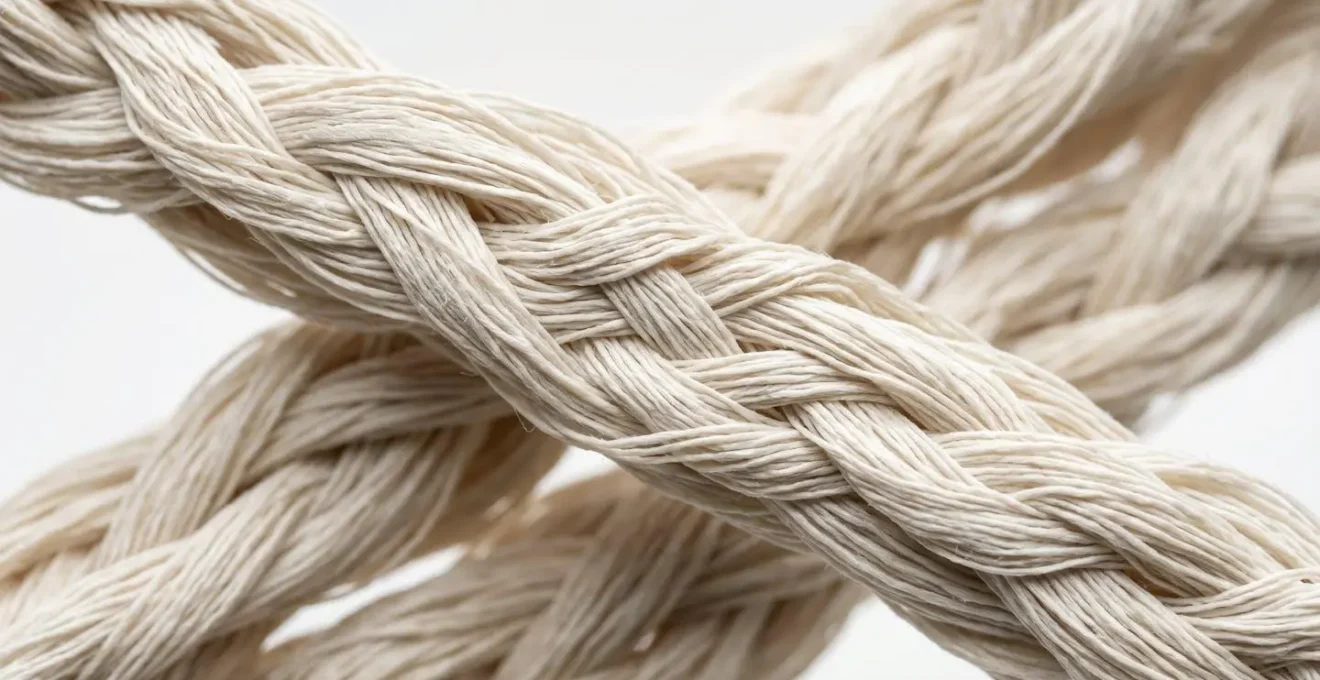
As you can see from the intricate structure of collagen, tendons are incredibly complex. They are not simple ropes but highly organized fibrous tissues designed for tensile strength. Training them requires a different mindset than training muscle. It demands patience, consistency, and an understanding of the biology that governs their adaptation. Without this, your peak fitness is built on a fragile and unsustainable base.
How to Use Cold Showers to Teach Your Nervous System to Handle Shock?
Resilience isn’t just physical; it’s neurological. Your ability to ‘bounce back’ is directly tied to how your autonomic nervous system responds to stress. A system that is constantly in a ‘fight or flight’ (sympathetic) state is brittle and prone to overreaction. The key is to train your ability to shift back to a ‘rest and digest’ (parasympathetic) state quickly and efficiently. Deliberate cold exposure, like a cold shower, is one ofthe most effective tools for this training.
When that icy water hits your skin, your body perceives it as a threat. Your heart rate spikes, you gasp for air, and stress hormones like cortisol flood your system. This is a classic sympathetic response. However, your conscious brain knows you are safe. Your job, as a coach to your own nervous system, is to regain control. By consciously slowing your breathing and relaxing into the discomfort, you are teaching your body to activate its parasympathetic response even while under acute stress. You are building a physiological buffer against shock.
This isn’t just theory; it’s a trainable adaptation. One 12-week cold immersion study found that with regular practice, the initial shock response diminishes, and participants’ baseline cortisol levels were significantly lower by week four. You are literally re-wiring your stress response. This ability to stay calm under pressure translates directly to athletic performance and life in general. When you face a stressful event—a near-miss in traffic, a tough workout, or a challenging work deadline—your nervous system will have the trained resilience to handle it without overreacting, allowing for a faster and more complete recovery.
Your Action Plan: Progressive Cold Exposure Protocol
- Start with a 2-minute warm shower to increase circulation and prepare the body.
- Gradually decrease the temperature to a level that is mildly uncomfortable but tolerable.
- Focus on slow, controlled, nasal breathing as your heart rate initially increases. Do not hyperventilate.
- Allow your body 30-60 seconds to adapt at this temperature before reducing it further.
- Incrementally decrease the temperature every 30-60 seconds, maintaining controlled breathing at each step.
- Maintain the coldest tolerable level for a target of 30 seconds, building up to 2 minutes over several weeks.
Trail Running or Treadmill: Which Builds Better Ankle Stability?
Your ability to stay on your feet and avoid injury depends heavily on proprioception—your body’s awareness of its position in space. This sense is most critical at the ankle, which must make thousands of micro-adjustments to navigate the world. When it comes to training this system, there is no contest: trail running is vastly superior to the treadmill for building real-world ankle stability and resilience.
A treadmill provides a perfectly flat, predictable surface. While it’s great for cardiovascular conditioning in a controlled environment, it does almost nothing to challenge the stabilizing muscles, tendons, and neurological pathways around your ankle. It’s like practicing for a complex exam by only answering the first, easiest question over and over. Your body learns one single, repetitive motion, leaving it dangerously unprepared for the unpredictable nature of the real world.
In contrast, a trail is a proprioceptive playground. Every step is different. Your foot lands on rocks, roots, and uneven soil, forcing your ankle through a full range of motion. This constant, varied stimulus strengthens the muscles that prevent inversion and eversion sprains. More importantly, it fine-tunes the neural drive between your brain and your lower leg, speeding up your reaction time. This is how you build an « intelligent » foot that can adapt instantly to unexpected shifts, turning a potential ankle roll into a non-event. While the acute risk of a trip or fall is higher on a trail, the long-term benefit of building a robust, adaptive system far outweighs the risk of chronic weakness from exclusively uniform surfaces.
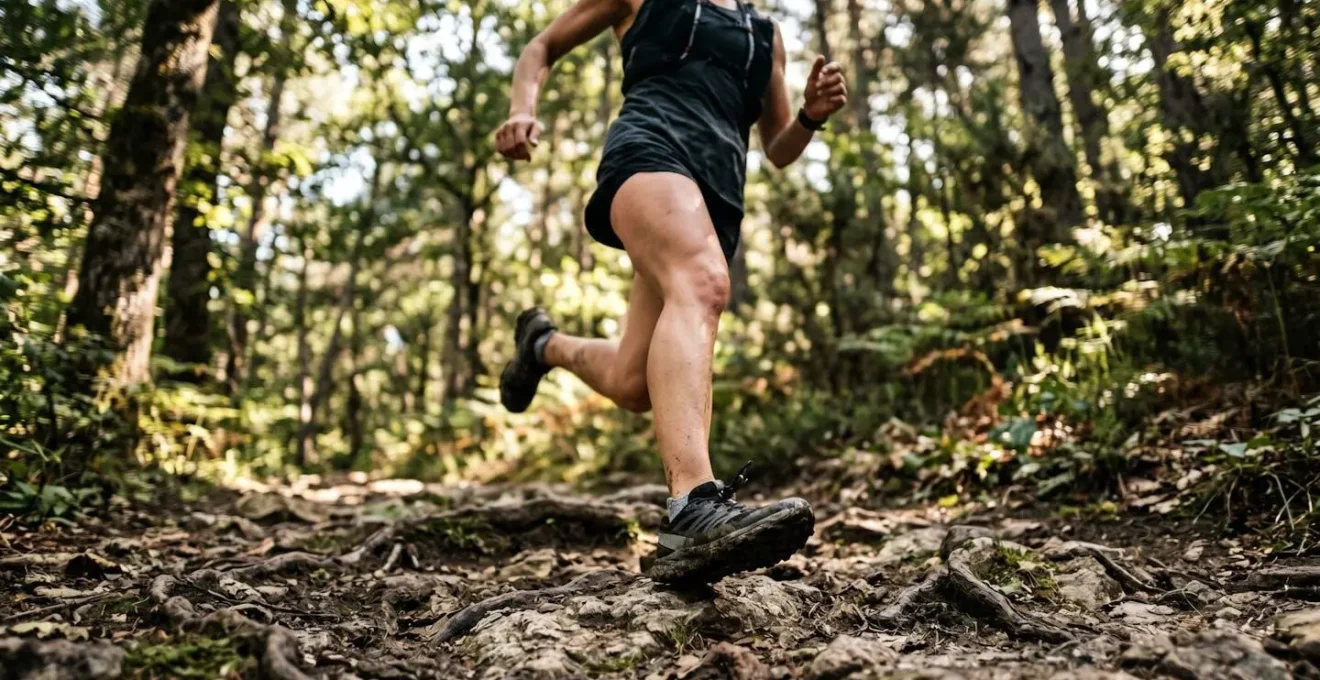
This table breaks down the critical differences. For an aging athlete or active parent, whose goal is to participate in life without fear of a simple misstep causing a major injury, the choice is clear. The treadmill has its place, but for building a truly resilient body, you must expose it to the kind of variability it will face outside the gym.
| Factor | Trail Running | Treadmill |
|---|---|---|
| Proprioceptive Demand | High – Constant micro-adjustments | Low – Uniform surface |
| Fascial Stimulation | Variable terrain activates mechanoreceptors | Minimal sensory variation |
| Real-world Transfer | Direct application to uneven surfaces | Limited to controlled environments |
| Injury Risk | Higher acute risk, lower chronic | Lower acute risk, potential overuse |
The Recovery Mistake That Leaves You Stiffness for 3 Days
You finish a brutal workout. You’re exhausted but proud. What’s the first thing you’re told to do? Stretch. So you drop to the floor and pull your tired muscles into deep, painful static stretches, holding each for 30-60 seconds. This is the single biggest recovery mistake that sabotages your ‘bounce back’ ability. It feels productive, but it’s actively working against your body’s healing process, leading to prolonged stiffness and delayed recovery.
Think about what you’ve just done. An intense workout creates microscopic tears in your muscle fibers. This is the desired stimulus for growth. These muscles are inflamed, sensitive, and in a state of emergency repair. Forcibly lengthening these damaged and shortened fibers with aggressive static stretching is like taking a frayed rope and pulling it taut. You’re not helping it heal; you’re potentially increasing the damage, exacerbating inflammation, and disrupting the delicate cellular repair process. This is why you wake up two days later feeling like you’ve been hit by a truck, a condition known as Delayed Onset Muscle Soreness (DOMS), made far worse by improper recovery.
The goal of post-workout recovery is not to force flexibility; it’s to facilitate healing. This means promoting blood flow to deliver nutrients and clear out metabolic waste. Instead of aggressive static stretching, your focus should be on active recovery. This includes gentle, dynamic movements like walking, light cycling, or mobility drills that move your joints through their full range of motion without forceful, prolonged holds. This approach enhances circulation without further stressing damaged tissues. A meta-analysis of recovery studies highlights that protocols focusing on facilitating repair, not forcing length, lead to significantly improved strength recovery within 48 hours.
Save the deep static stretching for your rest days, when your muscles aren’t in an acute state of repair. Immediately after a workout, treat your body with respect. Cool down with light movement, rehydrate, and refuel. By avoiding this common mistake, you allow your body to heal efficiently, dramatically shortening your recovery time and improving your ability to train consistently and safely.
How to Eat Collagen and Vitamin C to Fortify Your Ligaments?
You can’t build a brick house without bricks. For your connective tissues—your tendons, ligaments, and fascia—those bricks are collagen and vitamin C. You can do all the right exercises, but if you don’t provide your body with the raw materials it needs to repair and reinforce these structures, your progress will stall, and your injury risk will skyrocket. This isn’t about a generic « balanced diet »; it’s about targeted nutritional intervention to support connective tissue fortification.
Collagen is the most abundant protein in your body, forming the literal scaffold of your musculoskeletal system. When you perform exercises designed to load your tendons, you signal your body to build them back stronger. But to do this, it needs a ready supply of the specific amino acids found in collagen, namely glycine, proline, and hydroxyproline. While your body can produce some collagen on its own, supplementing with it, particularly around your workouts, can dramatically enhance this process.
However, collagen doesn’t work in a vacuum. It requires a critical partner: Vitamin C. This vitamin is an essential cofactor in the enzyme process that cross-links collagen fibers together, giving them their tensile strength and stability. Without adequate Vitamin C, the collagen you synthesize is weak and disorganized, like mortar made with too much sand. Consuming them together creates a powerful synergy. The ideal protocol is to consume hydrolyzed collagen (which is more easily absorbed) along with Vitamin C about 30-60 minutes *before* your workout. This « pre-loading » ensures the necessary building blocks are circulating in your bloodstream at the exact moment your workout stimulates the repair process.
Don’t guess at the dosage; the science is becoming increasingly specific. While many products offer small amounts, recent 2024 research in resistance-trained men found that a dose of 30g of hydrolyzed collagen produced significantly greater synthesis than 15g or 0g. This is a substantial dose, reflecting the serious demands that strength training places on our connective tissue. For the aging athlete, this isn’t an optional extra; it’s a non-negotiable part of a serious resilience-building strategy.
Why Does Cold Water Swimming in the UK Boost Your White Blood Cell Count?
The image of hardy swimmers plunging into frigid waters off the coast of the UK is often seen as a quirky cultural tradition. However, this practice, and cold water immersion in general, triggers a powerful and beneficial physiological response that directly enhances your body’s resilience. While the title specifies the UK, the phenomenon is universal: deliberate cold exposure can act as a training camp for your immune system, and the mechanism is rooted in our primal stress response.
When your body is submerged in cold water, it perceives a significant systemic shock. In response, your nervous system triggers a massive release of hormones, most notably norepinephrine. This hormone is a key player in the « fight or flight » response. A 12-week cold water immersion study showed that norepinephrine rose 2-3 fold in every single session. This surge has downstream effects, one of which is thought to be the stimulation of the immune system. The shock is believed to provoke a release of certain white blood cells (leukocytes), essentially putting your internal « security forces » on high alert.
While the exact mechanism is still being studied, the theory is that these repeated, short-term « drills » make your immune system more robust and responsive over time. It’s a classic example of hormesis: a small, controlled dose of a stressor leads to a beneficial adaptation that makes the overall system stronger. You are essentially using the cold to put your immune system through a workout, building its capacity to respond to real threats down the line.
Cold water therapy builds resilience. When you handle this short-term stress and learn to calm the nervous system, you learn to stay calm in other stressful situations. One study found that repeated exposure to cold water reduced the adrenaline-driven sympathetic response to a different stressor and increases the parasympathetic activity that calms the body down.
– Susanna Søberg, PhD, Winter Swimming
As Dr. Søberg points out, the benefit is twofold. You’re not only getting a potential boost in immune function but also training your nervous system’s ability to handle stress. This dual benefit is the core of building a truly antifragile body—one that is not only physically tough but also neurologically and immunologically prepared for challenges.
Why Is Your Handshake Strength a Predictor of All-Cause Mortality?
It sounds like a strange old wives’ tale, but a wealth of scientific literature confirms it: the strength of your handshake is one of the most reliable predictors of your future health, disability, and even your risk of dying from any cause. This isn’t about having a « manly » grip or intimidating business partners. A weak handshake is simply a canary in the coal mine—an early, measurable warning sign that underlying physiological systems are in decline.
So, what does grip strength actually indicate about your overall health? Primarily, it’s a powerful proxy for your neural drive. A strong grip isn’t just about the muscles in your forearm; it reflects the efficiency of your central nervous system’s ability to recruit muscle fibers. A strong, decisive signal from brain to muscle indicates a healthy, well-maintained nervous system. Conversely, a weakening grip can suggest that this crucial communication pathway is becoming less efficient, a process that affects the entire body, not just the hand.
Furthermore, declining grip strength is one of the earliest and most accurate indicators of sarcopenia, the age-related loss of muscle mass and function. Sarcopenia is a primary driver of frailty, falls, and the loss of independence in older adults. Since grip strength is easy to measure, it acts as a vital sign for your overall muscle mass and functional capacity. If your grip is failing, it’s a strong bet that the large, essential muscles of your legs and core are also weakening, even if it’s not as immediately obvious. This is why a strong grip is often referred to as your ‘functional reserve’. It indicates you have the physiological buffer—the surplus strength and system integrity—to survive major health events like surgery, a serious illness, or a bad fall. It’s not the handshake that matters; it’s what it represents: a body and nervous system with the resilience to weather life’s storms.
Key Takeaways
- True resilience is measured by your recovery speed, not your peak output.
- Fortifying slow-to-adapt connective tissues (tendons, ligaments) is more important for injury prevention than building muscle alone.
- Systemic stressors like cold exposure and heavy lifting are tools to train your nervous system and build a ‘physiological buffer’ against shock and frailty.
Why Lifting Heavy Weights Is Safer Than Walking for Your Long-Term Independence?
This statement seems completely backward, but it’s a critical truth for anyone serious about long-term health and independence. For an older adult, a simple fall during a walk can be a life-altering event, leading to a hip fracture and a spiral into frailty. The act of walking itself isn’t the danger; the danger is being too fragile to withstand the impact of a simple mistake. Paradoxically, the controlled risk of lifting heavy weights is the single most effective way to build a body that makes walking and all other daily activities safer.
Heavy resistance training does what no amount of walking can: it provides the specific stimulus needed to increase bone mineral density. Under heavy load, your bones bend microscopically, signaling cells called osteoblasts to build new bone tissue, making your skeleton stronger and more resistant to fractures. Walking is a low-impact activity and simply does not provide a strong enough signal to trigger this vital adaptation. By avoiding the perceived risk of lifting, you are inadvertently increasing your real-world risk of a catastrophic fracture.
Moreover, lifting heavy weights builds the two things you need to prevent a fall in the first place: strength and power. It strengthens the large muscle groups of your legs and core, providing the raw capacity to catch yourself from a stumble. It also improves your neural drive and reaction time, allowing you to react quickly and powerfully to a loss of balance. This builds your physiological buffer, giving you the reserve capacity to handle unexpected physical challenges. As a coach, I’ve seen this transformation firsthand.
Case Study: The Power of Foundational Strength
My recently retired client, Jane, has been training with me for 10 years, focusing on the fundamentals of strength. This proved its worth when she recently tripped on a curb. Instead of a devastating fall, she had the leg strength and rapid reflexes to catch herself with a lunge, turning a potential disaster into a minor stumble. Her years of building a resilient foundation paid off in a single, critical moment. She didn’t need peak fitness; she needed the ‘bounce back’ ability to absorb a real-world shock.
This is the ultimate goal. The objective of training isn’t just to look good or lift impressive numbers in the gym. It’s to build a body so robust and resilient that the activities of daily life become effortlessly safe. In this context, a structured, progressive heavy lifting program is not a risk; it’s the most effective insurance policy you can have for a long, active, and independent life.
To truly build a body that lasts, shift your focus from chasing fleeting peaks to consistently building a deep, systemic resilience. Start implementing these protocols today to fortify your foundation and ensure your ability to stay active and independent for decades to come.