
True vitality is not measured by a single hour of intense sweating in the gym; it is reflected in how effortlessly you move through your daily life. Recent advancements in biomechanics and longevity science have completely shifted our understanding of health. Today, peak fitness means little if your body lacks the resilience to bounce back from stress or the fundamental mobility to sit on the floor comfortably. Fitness and vitality intertwine to create a comprehensive shield against physical decline, focusing on metabolic health, neurological sharpness, and long-term independence.
Whether you are trying to counteract the damage of a sedentary office job, looking to preserve muscle mass as you age, or seeking to optimise your cardiovascular engine, a holistic approach is required. This comprehensive resource explores the core pillars of true physical resilience: daily movement, joint fortification, strategic strength training, cardiovascular efficiency, nervous system health, and the art of recovery. By understanding these interconnected systems, you can build a body that not only looks fit but functions flawlessly in the real world.
Modern conveniences have engineered movement out of our daily routines, leading to a silent epidemic of postural decay and metabolic stagnation. Addressing this requires more than just a brief burst of exercise; it requires a fundamental redesign of our daily habits.
It is a common misconception that a vigorous one-hour spin class can completely undo the physiological damage of sitting at a desk for nine hours. Prolonged sitting acts as a sedentary trap, significantly slowing your metabolism and downregulating the enzymes responsible for fat breakdown, regardless of your regular exercise routine. The human body requires frequent, low-level movement to maintain metabolic flexibility and vascular health.
To combat this, integrating micro-movements into your work day is essential. Here are effective strategies to break the sedentary cycle:
Muscles often receive the spotlight, but strong muscles are practically useless if the tendons and ligaments attaching them to your skeleton are weak. Think of your joints and connective tissues as the suspension system of a car; if the suspension is brittle, a powerful engine will only cause structural damage.
Many people confuse passive flexibility with active mobility. Flexibility is simply how far a muscle can stretch, while mobility is your neurological control over that range of motion. Pushing for extreme flexibility without strength can actually increase the risk of injuries, such as labrum tears before a heavy workout.
To future-proof your joints, consider these daily practices:
Looking down at a smartphone naturally shifts the head’s centre of gravity forward, adding up to 27kg of abnormal pressure to the cervical spine. Over time, this « techneck » posture accelerates cervical spine degeneration. Reversing this hunchback posture does not require complex equipment; simple daily habits, such as five minutes of wall slides or using strategic pillow-propping to maintain a neutral spine while sleeping, can drastically restore postural alignment.
After the age of 30, the human body naturally loses 3-5% of its muscle mass per decade without targeted intervention. This loss goes beyond aesthetics; it is a critical health hazard. Muscle tissue acts as a metabolic sponge, soaking up sugar from the bloodstream after a meal and serving as your best primary defence against insulin resistance.
Maintaining muscle is vital for longevity. In fact, a simple metric like handshake strength is a highly accurate predictor of all-cause mortality and long-term independence. To stimulate bone density and muscle growth, the stimulus must be adequately challenging. Relying solely on very light « pinkdumbbells » often fails to cross the threshold required for true adaptation. Lifting heavier weights, whether through machines for a 60-year-old beginner or free weights for an experienced lifter, is inherently safer for long-term health than avoiding resistance training altogether.
Furthermore, overcoming age-induced anabolic resistance requires nutritional adjustments. Consuming higher protein breakfasts and understanding that staying the same weight while losing inches is the ultimate goal will help you maintain a functional, metabolically active body with as little as two focused workouts a week.
When it comes to cardiovascular health, harder and faster is not always better. Current physiological guidelines emphasise the importance of building a robust aerobic base before pushing into high-intensity anaerobic work.
Zone 2 training—exercising at a steady pace where you can comfortably hold a conversation—is widely considered the secret weapon of centenarians. Unlike sprinting, slow jogging builds more mitochondria (the energy factories in your cells) and improves your body’s ability to burn fat for fuel. Splitting your training week using an 80/20 ratio (80% easy, 20% hard) allows endurance athletes to run faster by actually running slower most of the time, avoiding the overtraining trap that often leads to stubborn belly fat accumulation.
Breathing mechanics profoundly impact how efficiently your body uses oxygen. Deep breathing alone will not increase oxygen absorption if your carbon dioxide (CO2) tolerance is low. Paradoxically, carbon dioxide is the key that unlocks oxygen from your red blood cells, allowing it to enter your tissues (the Bohr effect).
Feeling clumsy or frequently spraining the same ankle is rarely just a mechanical issue; it is often an early sign of neural decline or poor proprioception. The brain relies on sensory feedback from the feet and joints to map the body in space.
Repetitive, linear gym routines can make the nervous system rigid. To maintain cognitive health and physical adaptability, you must challenge the brain with novel, complex tasks. Activities like crawling on the floor help reset the central nervous system, while learning to juggle has been shown to increase grey matter volume in just a few weeks. Even a simple test like the ability to walk and talk simultaneously can be a strong predictor of long-term cognitive health.
Modern footwear often hinders our natural balance. Highly cushioned running shoes essentially blind your brain to the ground, muting the sensory signals required for ankle stability. This is why training barefoot on a solid floor often improves real-world balance much more effectively than balancing on an unstable Bosu ball. Stripping away artificial support and relying on natural stability is crucial for retraining the brain to trust a joint after an injury.
Training provides the stimulus, but fitness is actually built during recovery. The pervasive guilt trap that forces athletes to train when they should be resting is a primary driver of stagnation and injury.
Soreness is not a definitive indicator of a good workout; excessive soreness often means you are injuring muscle tissue rather than building it. When dealing with post-workout stiffness, active recovery methods like walking are highly effective for flushing lactic acid. Conversely, masking the pain with non-steroidal anti-inflammatory drugs (NSAIDs) like ibuprofen is detrimental, as it blunts the natural inflammatory response required for muscle hypertrophy.
Similarly, while ice baths are excellent for immediate recovery during dense competition schedules, using them immediately after a hypertrophy workout can completely halt the muscle-building process. Understanding when to apply these tools is the key to continuous progress.
The most potent performance-enhancing protocol is high-quality sleep. The majority of human growth hormone is released during the first four hours of deep sleep. If you struggle to sleep deeply on days you haven’t exhausted yourself physically, practising nervous system down-regulation—such as taking a cold shower to train shock tolerance followed by slow nasal breathing—can prepare the body for rest.
Remember that « doingnothing » on a rest day can sometimes slow recovery by allowing tissues to stiffen. Engaging in light, restorative movement, coupled with smart carb cycling to adjust calories on non-training days, ensures your body heals efficiently, ready to tackle the next challenge with full vitality.

The Cycle to Work scheme is less about the bike and more about building a sustainable fitness system that integrates seamlessly into your existing workday. Active commuting consistently beats a gym membership by embedding movement into your non-negotiable daily schedule….
Lire la suite
The root cause of recurring ankle sprains is not muscular weakness, but a neurological failure—your brain’s sensory map of the joint is corrupted. External supports like cushioned shoes and chronic taping numb the sensory feedback your brain needs to protect…
Lire la suite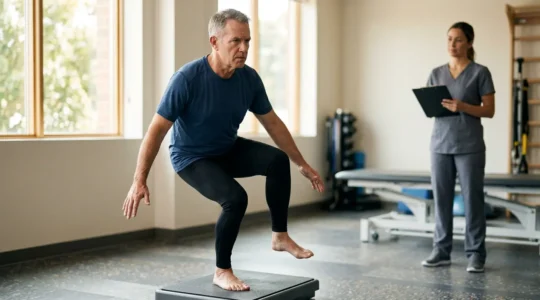
In summary: A sudden feeling of clumsiness often signals a weakening of the brain-body feedback loop, not just muscle weakness or inevitable aging. You can actively rebuild these neural pathways with specific, targeted exercises that challenge your coordination and add…
Lire la suite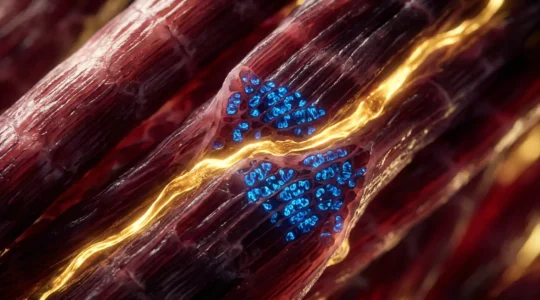
Many believe diet is the only weapon against insulin resistance, but this overlooks the body’s most powerful metabolic regulator: skeletal muscle. Muscle acts as a « glucose sponge, » absorbing up to 80% of sugar from your blood after a meal. Having…
Lire la suite
Contrary to popular belief, gentle exercise like walking is not enough to secure your future independence; the key lies in safely and progressively lifting heavy weights. The real risk isn’t injury from lifting, but the inevitable decline from muscle and…
Lire la suite
Taking ibuprofen for muscle soreness doesn’t just reduce pain; it actively sabotages the very growth you train for by disrupting key biological signals. It significantly blunts muscle protein synthesis, the core process of building bigger muscles. It suppresses collagen production,…
Lire la suite
Contrary to popular belief, complete inactivity on rest days is a mistake that can hinder muscle repair. True recovery isn’t passive; it’s an active process of promoting blood flow, managing inflammation, and supporting cellular repair. This guide replaces the ‘do…
Lire la suite
The feeling of ‘air hunger’ often stems not from a lack of oxygen intake, but from the body’s inability to release the oxygen it already has into the tissues. Efficient oxygen delivery is governed by the Bohr effect, where carbon…
Lire la suite
Endless high-intensity training isn’t the path to peak fitness; it’s a shortcut to burnout and stagnation. The vast majority of your training (around 80%) should be deliberately slow to build a massive aerobic base at a cellular level. The primary…
Lire la suite
Feeling locked up isn’t just about ‘tight muscles.’ Your body operates on a strict ‘use it or lose it’ policy governed by your nervous system and joint fluid. If a range of motion isn’t used every few days, your brain…
Lire la suite