
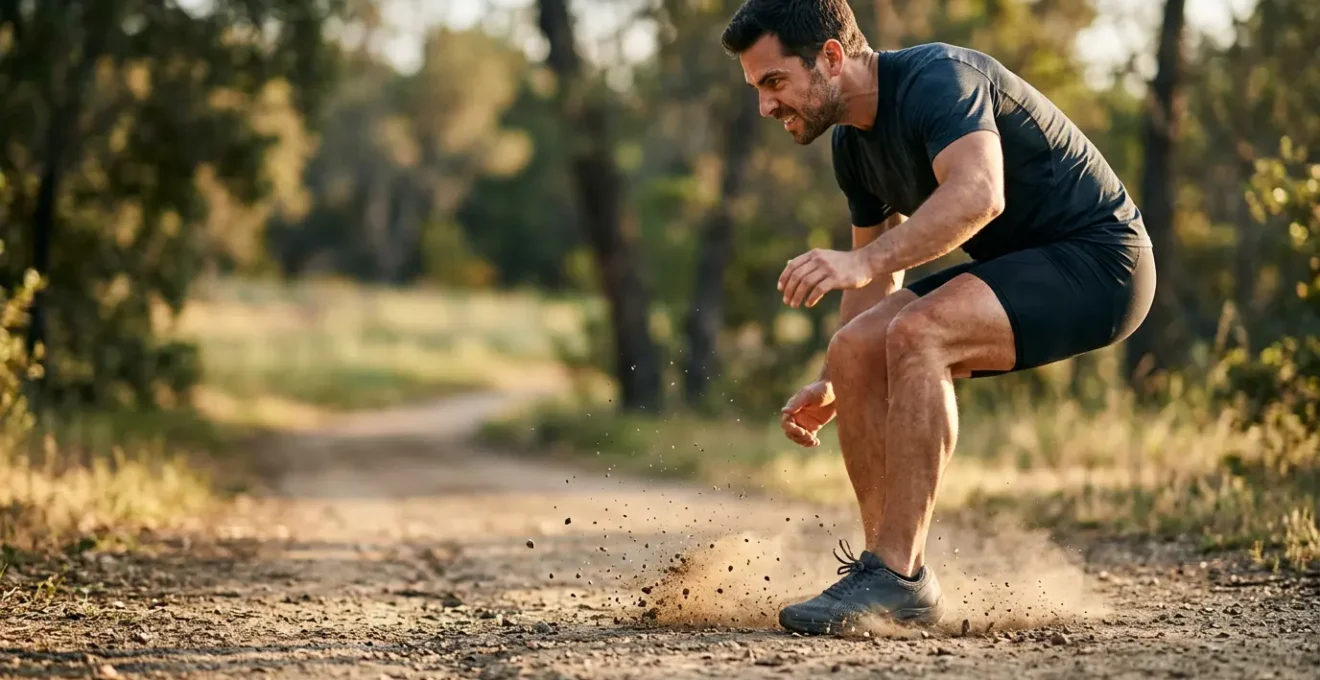
Contrary to popular belief, your gentle daily walk is providing a false sense of security and may not be protecting you from osteoporotic fractures.
- Bone density is not built by duration of exercise, but by the intensity and impact of the mechanical signal sent to the skeleton.
- Activities like walking and cycling lack the necessary osteogenic stimulus, sometimes leading to lower bone density than in sedentary individuals.
Recommendation: Immediately begin integrating short bouts of high-impact exercise (like jumping) and progressive heavy lifting to send the powerful signals your bones need to rebuild and strengthen themselves.
You faithfully take your daily walk, maybe you even cycle or swim, believing you are doing everything right for your long-term health. You feel good, you’re active, and you trust this routine is safeguarding your future, particularly your bones. But here lies a dangerous and widespread misconception: for bone health, especially in preventing devastating hip fractures, being active is not the same as being effective. The gentle, low-impact movements you rely on are likely falling dangerously short of what your skeleton truly needs.
The standard advice to simply “do weight-bearing exercise” is tragically incomplete. It fails to communicate the most critical variable: intensity. Your bones are living tissue, but they are also lazy. They do not respond to gentle encouragement; they respond to urgent, powerful signals. This is the principle of mechanical loading. Without a sufficient stimulus—a jolt, a heavy load—the bone-building cells (osteoblasts) never receive the message to get to work. Your daily walk, while excellent for cardiovascular health, is merely maintenance noise to your skeleton.
This article will dismantle the myth of low-impact safety. We are not just going to tell you to exercise more; we are going to reveal the specific types of signals your bones are crying out for. We will explore why activities you thought were healthy could be leaving your skeleton fragile, and how you can strategically and safely introduce the right kind of stress—the kind that forges a fracture-proof frame. It’s time to move beyond simple activity and embrace the science of building real, lasting bone strength.
This guide provides a clear roadmap to understanding and implementing a truly effective bone health strategy. Below is a summary of the critical topics we will cover to help you build a resilient skeleton.
Summary: Rebuilding Your Skeleton from the Ground Up
- Why Do You Need High-Impact Jumping to Signal Bone Growth?
- Vitamin D3 and K2:How to Maintain Nutritional Balance on a Tight UK Supermarket Budget?
- The ‘Non-Impact’ Trap That Leaves Cyclists with Fragile Skeletons
- Bisphosphonates or Heavy Lifting: Can You Reverse Osteopenia Naturally?
- How to ‘Fall-Proof’ Your Bathroom to Reduce Fracture Risk by 50%?
- Vitamin K2 or Calcium: Which Actually Keeps Plaque Out of Your Arteries?
- The ‘Pink Dumbbell’ Mistake That Fails to Stimulate Bone Density
- Why Lifting Heavy Weights Is Safer Than Walking for Your Long-Term Independence?
Why Do You Need High-Impact Jumping to Signal Bone Growth?
To understand why a walk isn’t enough, you must understand how bone remodels itself. Your skeleton is in a constant state of turnover, with old bone being broken down (by osteoclasts) and new bone being built (by osteoblasts). To stimulate the builders, you need to send a clear, powerful signal. That signal is mechanical loading delivered with high-impact force. Gentle, repetitive movements like walking are below the minimum threshold required to trigger this bone-building, or osteogenic, response. Your body simply adapts and sees no reason to invest energy in creating denser bone.
High-impact jumping, however, is a direct and potent command. Each time you land, you create a ground reaction force that travels through your skeleton, particularly at the hip and spine—the most vulnerable sites for osteoporotic fractures. This jolt is the precise signal that tells your osteoblasts, “We are under significant stress; we must build back stronger.” It’s not about exercising for hours; it’s about delivering a short, sharp, and effective stimulus. In fact, research indicates that as few as 50 jumps per day, performed at least four times a week, can be a sufficient dose to improve bone density.
Case in Point: The Hopping Study
The power of this targeted impact isn’t theoretical. British researchers documented that premenopausal women who performed 50 jumps daily over six months gained over 4% in hip bone density. Later studies confirmed these results, showing that even 70-year-old men built impressive bone strength with 50 one-legged hops a day, and postmenopausal women (ages 55-70) significantly increased hip-neck bone density with similar, simple protocols. This demonstrates that a small, consistent dose of the right kind of impact is profoundly more effective than hours of low-impact activity.
This approach is about working smarter, not harder. Instead of hours of walking that yield minimal bone benefits, a few minutes of intentional jumping can provide the powerful osteogenic stimulus needed to maintain a strong, resilient skeleton as you age.
Vitamin D3 and K2:How to Maintain Nutritional Balance on a Tight UK Supermarket Budget?
Mechanical signals like jumping tell your bones to rebuild, but this process is impossible without the right building materials. For decades, the focus has been on calcium. However, calcium is just a brick; without a smart construction crew, it’s useless and can even be harmful. The true foremen of bone construction are Vitamin D3 and Vitamin K2. Vitamin D3 is essential for absorbing calcium from your gut into your bloodstream. Without enough D3, dietary calcium is largely wasted.
But absorption is only half the battle. Once in the blood, calcium needs to be directed into your bones and teeth, and kept out of your arteries and soft tissues where it can cause calcification (atherosclerosis). This is the critical, often-overlooked job of Vitamin K2. It activates proteins that bind calcium and deposit it into the bone matrix. Taking D3 without K2 is like having a fleet of delivery trucks (D3 and calcium) with no drivers (K2) to tell them where to go. The synergy is non-negotiable; studies show participants taking both vitamins together experienced 25% greater improvements in bone density compared to those taking them separately.
In the UK, where sunlight is scarce for many months, relying on diet alone for Vitamin D is a failing strategy. While some foods are fortified, supplementation is often essential. For K2, affordable supermarket sources include aged cheeses like cheddar and Gouda, as well as egg yolks. However, achieving the optimal therapeutic dose for bone health usually requires targeted supplementation.
Your Bone-Building Supplement Protocol
- Vitamin D3: 1,000-2,000 IU daily minimum, taken with a fat-containing meal for optimal absorption.
- Vitamin K2 (MK-7 form): 100-200 mcg daily, taken alongside D3 for synergistic effect.
- Magnesium: Essential cofactor for D3 activation, supplement if dietary intake is low (from sources like dark leafy greens, nuts, and seeds).
- Timing: Take supplements with meals containing healthy fats (olive oil, avocado, nuts) to enhance absorption.
- Consistency: Daily supplementation is far more effective than sporadic high doses for maintaining stable nutrient levels.
The ‘Non-Impact’ Trap That Leaves Cyclists with Fragile Skeletons
Many people choose activities like cycling or swimming because they are “low-impact” and perceived as safe for the joints. While they are excellent for cardiovascular fitness, they represent a significant trap for skeletal health. Because these activities are non-weight-bearing, they provide virtually no osteogenic stimulus. Your skeleton is supported by the bike or the water, so it receives no signal that it needs to be strong. The result can be alarmingly poor bone mineral density, even in elite athletes.
The evidence is stark and counter-intuitive. A landmark study comparing competitive road cyclists to runners revealed a shocking disparity: 63% of cyclists had osteopenia of the hip or spine, compared to only 19% of the runners. The repetitive, high-impact stress of running provided the exact signal the cyclists were missing, protecting the runners’ skeletons despite the high physical demands. This highlights the critical difference between being “fit” and having a “strong skeleton.” You can have the heart and lungs of a champion and the bones of a sedentary person.
This issue is so prevalent in the sport that experts debate the best course of action, with some even considering medication. As one editorial in the Journal of Applied Physiology noted when discussing the phenomenon:
Although oral bisphosphonates are effective in increasing BMD and reducing the risk of bone fractures in men with osteoporosis, we feel that pharmacological treatment should be the last line of defense, especially in young athletes.
– Journal of Applied Physiology Editorial, Fragile bones of elite cyclists: to treat or not to treat?
The lesson for recreational exercisers is urgent: if you primarily cycle or swim, you must supplement your routine with dedicated, high-impact or heavy-resistance exercises. Relying solely on non-impact cardio creates a dangerous illusion of health that leaves your bones vulnerable.
Bisphosphonates or Heavy Lifting: Can You Reverse Osteopenia Naturally?
When faced with a diagnosis of osteopenia or osteoporosis, the first line of medical defense is often a class of drugs called bisphosphonates. These drugs work by poisoning and slowing down the osteoclasts—the cells responsible for breaking down old bone. By reducing bone resorption, they can artificially increase bone mineral density on a DEXA scan. However, this approach has a fundamental limitation: it primarily stops the breakdown process rather than actively stimulating the building process. The result is older, more brittle bone that may be denser but not necessarily stronger or more resilient.
Heavy lifting offers a fundamentally different, and arguably superior, approach. It works on the other side of the bone remodeling cycle. Progressive resistance training, where you systematically increase the weight you lift, creates powerful mechanical forces that directly stimulate the osteoblasts to build new, healthy, and robust bone tissue. You are not just preserving old bone; you are actively creating a stronger, higher-quality skeletal architecture. This is true bone rejuvenation, not just managed decline.
Therefore, the choice is not merely between a pill and an exercise. It is a choice between two distinct biological strategies. Do you want to slow down the natural process of bone turnover, or do you want to supercharge the bone-building half of that equation? For many individuals with osteopenia, a dedicated and properly structured heavy lifting program can be a powerful tool to halt and even reverse bone loss naturally, without the potential side effects associated with long-term drug use. It empowers you to become the architect of your own skeleton.
How to ‘Fall-Proof’ Your Bathroom to Reduce Fracture Risk by 50%?
Building dense bones is the primary strategy, but preventing the impact that causes a fracture is an equally critical line of defense. The majority of hip fractures in older adults occur not from major trauma, but from a simple fall from standing height. The bathroom, with its hard, slippery surfaces, is one of the most dangerous places in the home. “Fall-proofing” is not just about installing grab bars; it’s about actively training your body to maintain balance and recover from a stumble.
The key is to integrate small, consistent “micro-habits” of balance training into your daily routine. Your neuromuscular system—the communication between your brain and muscles—is what controls your stability. Like any other physical skill, it can be improved with practice. By challenging your balance in a safe and controlled way every day, you are essentially rehearsing for the moment you might slip or trip, dramatically increasing your chances of recovering your footing instead of falling.
These exercises do not require a gym or special equipment. They can be woven seamlessly into your existing habits, particularly in the bathroom, turning a high-risk environment into your personal training ground.
- Stand on one leg while brushing your teeth, aiming for a minute on each leg to build ankle stability and proprioception.
- Walk heel-to-toe along the lines of your floor tiles as if on a tightrope each morning to improve dynamic balance.
- Practice sitting down and standing up from the toilet several times without using your hands to build leg strength and control.
- If space allows, perform a few small jumps or heel drops after each bathroom break to send that vital osteogenic signal.
- Start with what is manageable and progress gradually. If a single-leg stand is too difficult, hold onto the counter for support and slowly reduce your reliance on it over time.
This proactive approach to stability transforms you from a potential victim of a fall into a resilient individual with the physical capacity to prevent one.
Vitamin K2 or Calcium: Which Actually Keeps Plaque Out of Your Arteries?
The obsessive focus on high-dose calcium supplementation for bone health has a dark side known as the “calcium paradox.” Without proper direction, excess calcium in the bloodstream doesn’t always end up in the bones. Instead, it can be deposited in the arteries, leading to calcification, arterial stiffness, and an increased risk of cardiovascular disease. This is why simply taking more calcium can be a dangerous and misguided strategy. The missing link, again, is Vitamin K2.
Think of Vitamin K2 as the “calcium traffic cop.” It activates two key proteins: osteocalcin and Matrix Gla Protein (MGP). Activated osteocalcin’s job is to bind calcium and deposit it into your bone matrix, strengthening your skeleton. Simultaneously, activated MGP’s job is to patrol your arteries and soft tissues, binding to any stray calcium and preventing it from forming dangerous plaque. Therefore, adequate K2 ensures calcium goes where you need it (bones) and stays out of where you don’t (arteries).
Case in Point: The Role of K2 in Bone Fusion
The clinical importance of K2 in directing calcium is becoming increasingly clear. For instance, a 2025 prospective study published in Nature looked at osteoporotic patients undergoing spinal surgery. The group receiving a combination of vitamin K2, vitamin D3, and calcium showed significantly higher rates of complete bone fusion at six months compared to the control group that only received D3 and calcium. This demonstrates that in a critical bone-healing scenario, the addition of K2 was the key factor in successfully incorporating calcium into the new bone structure, achieving a fusion rate of 91.67% versus 74.29% in the control group.
While research is ongoing, consistent supplementation with K2 has been shown to be effective. Studies have found that vitamin K2 supplementation achieves a 1-3% annual BMD improvement in postmenopausal women, a significant gain that also protects cardiovascular health. The takeaway is clear: calcium is not the hero of the bone health story. True skeletal and cardiovascular protection comes from ensuring you have enough Vitamin K2 to direct the calcium you consume.
The ‘Pink Dumbbell’ Mistake That Fails to Stimulate Bone Density
Just as walking is often too gentle to signal bone growth, much of the resistance training performed by older adults falls into the same trap. The “pink dumbbell” mistake refers to using weights that are too light to provide a meaningful osteogenic stimulus. While lifting a 1kg or 2kg weight may feel like you’re doing something, if the load does not significantly challenge your muscles and skeleton, it will not trigger an adaptive response. Your bones will not get the message to become denser and stronger.
Building bone requires intensity. The principle of progressive overload is paramount: you must continually challenge your body by gradually increasing the weight, repetitions, or difficulty of an exercise. The load must be heavy enough to signal to your body that the current structure is insufficient and needs reinforcement. For bone density, this generally means working with weights that you can lift for a lower number of repetitions (e.g., 5-8 reps) with good form, rather than a high number of reps (15-20) with a very light weight.
This does not mean you must start by lifting dangerously heavy weights. It means starting with a manageable weight and having a clear plan for progression. The goal is to move from a state of comfort to a state of challenge. That challenge is precisely where the bone-building magic happens. An exercise program that does not include progressive overload is, for the purposes of bone density, largely a waste of time.
- Start with form: Master the movement with a light weight or just your bodyweight.
- Increase repetitions: Once form is perfect, work on increasing the number of reps to a target (e.g., 8-10 reps).
- Increase the weight: Once you can comfortably complete your target reps, increase the weight slightly. The last couple of reps should feel challenging.
- Be consistent: Aim for 2-3 full-body resistance training sessions per week.
- Listen to your body: Challenge yourself, but never sacrifice form or push through sharp pain.
Key Takeaways
- Your daily walk is insufficient for stimulating bone growth; high-impact activities like jumping are necessary to send the right mechanical signals.
- Vitamin D3 and K2 work synergistically to ensure calcium is absorbed and deposited into bone, not arteries.
- Heavy, progressive resistance training is a powerful, natural way to reverse osteopenia by actively building new, strong bone tissue.
Why Lifting Heavy Weights Is Safer Than Walking for Your Long-Term Independence?
It may sound radically counter-intuitive, but for your long-term independence, a structured heavy lifting program is functionally safer than a simple walking routine. The fear of lifting heavy weights is often rooted in a misunderstanding of risk. The true, catastrophic risk for an older adult is not a muscle strain in the gym; it is a hip fracture from a simple fall, an event that is a common precursor to a loss of independence and a cascade of further health problems.
Lifting heavy weights provides a powerful, dual-pronged defense against this outcome. First, as we’ve established, it is one of the most effective ways to directly increase bone mineral density, making your bones fundamentally more resistant to fracture. A stronger skeleton can better withstand the force of a fall. In fact, research demonstrates that a 10% increase in peak bone mass can delay the onset of osteoporosis by an average of 13 years. Secondly, heavy lifting builds muscle mass and strength (combating sarcopenia), improves neuromuscular coordination, and enhances balance. This makes you physically more capable and less likely to fall in the first place.
Walking, while beneficial in many ways, does not confer these specific adaptations. It does not build significant strength, power, or bone density. Therefore, a person who only walks may be frail and unstable, with brittle bones—a perfect storm for a life-altering fracture. A person who lifts heavy is building a robust, resilient body—strong bones, strong muscles, and a stable base. This is the very definition of physical independence. The managed, controlled risk of lifting a heavy weight in the gym is infinitesimally small compared to the unmanaged, catastrophic risk of a fall at home.
Your long-term independence is not a matter of chance; it’s a matter of choice. It requires moving beyond outdated, insufficient advice and embracing a proactive, evidence-based strategy. Start building a stronger, fracture-proof future today by incorporating these high-impact signals and progressive strength protocols into your routine.