
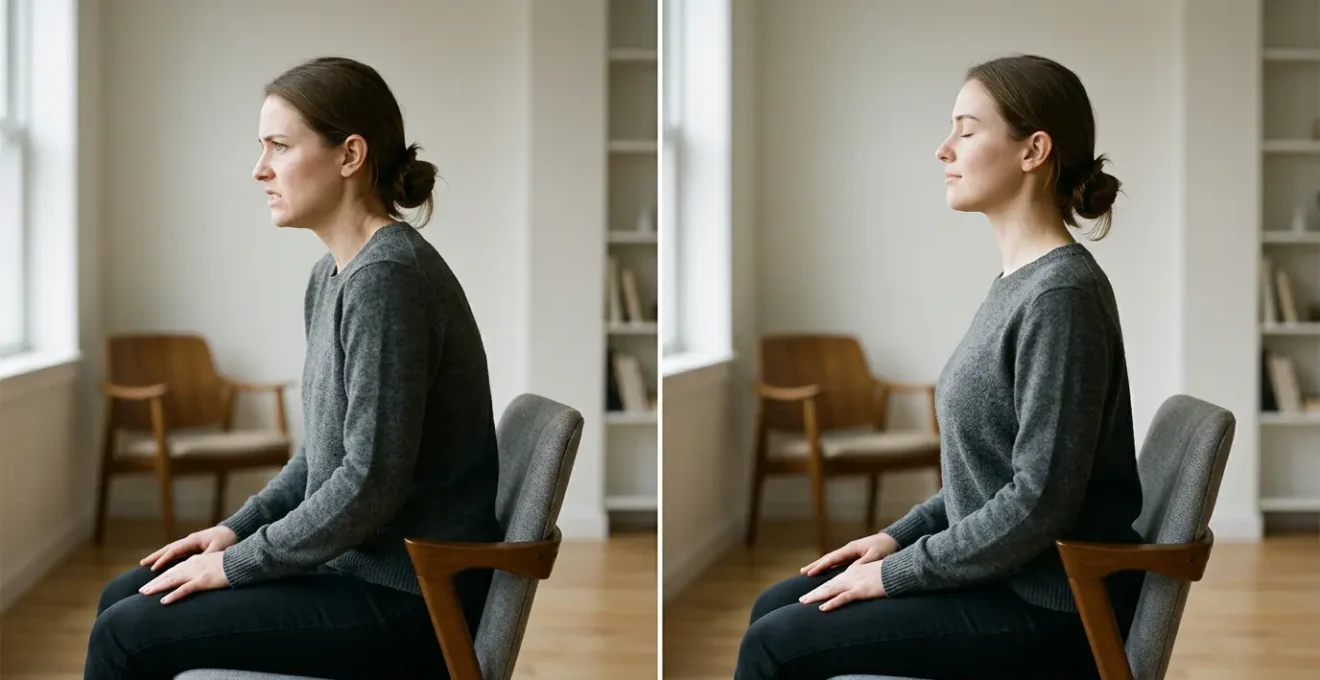
Contrary to popular belief, taking a forceful “deep breath” during stress can worsen anxiety by disrupting your body’s oxygen-carbon dioxide balance.
- Chronic stress creates a low tolerance to carbon dioxide (CO2), making large inhales feel suffocating and trigger hyperventilation.
- Specific, controlled breathing patterns are not about taking in more air, but about using rhythm and breath holds to directly regulate the autonomic nervous system.
Recommendation: Instead of focusing on the size of your inhale, focus on the length and control of your exhale to consciously shift your body out of “fight-or-flight” mode.
As a breathwork instructor, I see the same pattern constantly: a person in the grip of stress or anxiety is told to “just take a deep breath,” and their panic only escalates. This well-intentioned advice often fails because it misunderstands the physiology of stress. When your nervous system is in overdrive—a state governed by the sympathetic “fight-or-flight” response—your breathing pattern has already become shallow and rapid. A sudden, forceful inhale into a system that is already on high alert can feel like pouring fuel on a fire. It can trigger feelings of suffocation and lead to hyperventilation.
The problem isn’t the intention; it’s the execution. The key to calming a dysregulated system isn’t simply inhaling *more* air, but breathing *better*. This involves shifting from a “top-down” approach (willing yourself to relax) to a “bottom-up” one, using the breath as a direct, physical lever to influence your internal state. True breath control is about precision. It’s about understanding that different rhythms and patterns are like different commands for your nervous system. You wouldn’t use the same tool to build a house as you would to repair a watch.
This article moves beyond the generic advice. We will dismantle the “deep breath” myth by exploring the science behind why it fails. More importantly, you will learn a toolkit of precise, evidence-based breathing techniques. Each one serves a distinct purpose, from providing an emergency reset during a panic attack to building long-term resilience against stress. Think of your breath not as an involuntary action, but as the remote control for your nervous system. It’s time to learn how to use the buttons.
This guide will provide a structured approach to mastering your internal state through breath. Below, you will find a series of precise techniques and the scientific principles that make them effective, allowing you to choose the right tool for any situation.
Summary: The Practitioner’s Guide to Nervous System Regulation via Breath
- Navy SEAL Breathing: How to Use Box Breathing Before a Presentation?
- How to Use the 4-7-8 Rhythm to Switch Off Your Brain at Night?
- Two Inhales, One Exhale: Why This Pattern Resets Stress Instantly?
- The Hyperventilation Mistake That Decreases Oxygen to Your Brain
- How to Increase Your ‘Bolt Score’ to Reduce Breathlessness?
- How to Hum or Gargle Your Way Out of a Panic Attack?
- Mouth vs Nose Breathing: Which One Increases Oxygen Uptake by 10%?
- Why Is ‘Just Relaxing’ Impossible When Your Nervous System Is Stuck in Overdrive?
Navy SEAL Breathing: How to Use Box Breathing Before a Presentation?
Box Breathing, also known as “tactical breathing,” is a cornerstone technique for maintaining composure under pressure. Its symmetrical, four-part structure imposes a simple, predictable rhythm on the body, making it an ideal tool for interrupting the chaotic patterns of stress. The goal is not sedation, but a state of calm alertness. By holding the breath at both the top of the inhale and the bottom of the exhale, you prevent the rapid gas exchange that can lead to hyperventilation and lightheadedness. This balanced cadence helps regulate the autonomic nervous system, pulling it back from a sympathetic (fight-or-flight) state towards a more centered baseline.
The practice is particularly effective before high-stakes events like a presentation or a difficult conversation. It works by increasing focus and reducing the physiological markers of stress. In fact, research shows that deep, controlled breathing practices can lead to lower cortisol levels and increased attention. It provides a simple, internal anchor to concentrate on when external pressures mount. As SEALFIT creator Mark Divine, a proponent of the technique, states:
I used it every day in SEAL training … it helped me graduate as the honor man, [the] No. 1 graduate.
– Mark Divine, Creator of SEALFIT and Unbeatable Mind
To practice Box Breathing, follow this protocol:
- Sit or stand with a straight back and relaxed shoulders.
- Exhale completely through your mouth to empty your lungs.
- Inhale slowly and gently through your nose for a count of four seconds.
- Hold your breath, without clamping down, for a count of four seconds.
- Exhale slowly and completely through your mouth for a count of four seconds.
- Hold your breath at the bottom of the exhale for a count of four seconds.
- Repeat this cycle for 4-5 minutes, or until you feel your focus return and your heart rate stabilize.
How to Use the 4-7-8 Rhythm to Switch Off Your Brain at Night?
If Box Breathing is for calm focus, the 4-7-8 technique is a powerful sedative. Developed by Dr. Andrew Weil, this rhythm is specifically designed to activate the parasympathetic nervous system—the body’s “rest and digest” mode. Its power lies in the extended exhale, which is twice as long as the inhale. A long, slow exhale is one of the fastest physiological hacks to signal to your brain that you are safe. It slows the heart rate and prepares the body for deep relaxation and sleep.
This technique is not about the volume of air, but the deliberate manipulation of tempo. The held breath (for a count of seven) allows oxygen to permeate the bloodstream more fully, while the forceful, extended exhale (for a count of eight) expels a significant amount of CO2. This process helps to quiet the mental chatter that often prevents sleep. It acts as a form of meditation, forcing your mind to concentrate on the count and the physical sensations of breathing rather than on racing thoughts.
As you can see, the focus is on a comfortable and relaxed posture, allowing the body to fully surrender to the calming effects of the rhythm. Consistent practice can train your nervous system to respond more quickly to the signal to switch off. To use the 4-7-8 technique effectively, follow these steps sourced from guidelines for therapeutic breathing exercises:
- Place the tip of your tongue against the ridge of tissue just behind your upper front teeth and keep it there throughout the entire exercise.
- Exhale completely through your mouth, making a distinct “whoosh” sound.
- Close your mouth and inhale quietly through your nose to a mental count of four.
- Hold your breath for a count of seven.
- Exhale completely through your mouth, making a “whoosh” sound to a count of eight.
- This completes one breath. Inhale again and repeat the cycle three more times for a total of four breaths.
Two Inhales, One Exhale: Why This Pattern Resets Stress Instantly?
The “physiological sigh” is the body’s natural, built-in tool for resetting stress and anxiety. You’ve done it countless times without thinking—before falling asleep or after a bout of crying. It consists of two rapid inhales through the nose followed by a long, extended exhale through the mouth. This pattern is not arbitrary; it’s a highly efficient mechanism for off-gassing excess carbon dioxide and reinflating collapsed alveoli (tiny air sacs) in the lungs.
When you are stressed, your breathing becomes shallow, causing some alveoli to deflate. A normal deep breath may not be enough to pop them back open. The physiological sigh solves this with a clever trick: the first inhale fills most of the lungs, and the short second inhale creates a burst of pressure that re-inflates the remaining collapsed sacs. This maximizes the surface area for gas exchange, allowing you to expel CO2 much more efficiently on the long exhale. The result is an almost instantaneous feeling of relief and a rapid decrease in heart rate. It is arguably the fastest “bottom-up” tool for calming down in real-time.
Stanford Study on Physiological Sigh Effectiveness
A recent randomized controlled trial from Stanford University, led by Dr. David Spiegel and popularized by neuroscientist Andrew Huberman, provides strong evidence for this technique. The study compared the effects of physiological sighing, box breathing, and mindfulness meditation over a 28-day period. While all practices improved mood and reduced anxiety, the group practicing the physiological sigh showed the most significant daily improvement in positive mood and the greatest reduction in respiratory rate, highlighting its superior efficiency for immediate stress regulation.
To perform a physiological sigh, the method is simple: take a deep inhale through your nose, and then, without exhaling, take another short, sharp inhale to fully expand your lungs. Finally, exhale slowly and completely through your mouth. Repeating this just one to three times can be enough to halt a rising sense of panic.
The Hyperventilation Mistake That Decreases Oxygen to Your Brain
Here we arrive at the central reason why “take a deep breath” is flawed advice for a stressed person. The common assumption is that stress is caused by a lack of oxygen, and a big breath will fix it. The reality is the opposite. During stress-induced rapid breathing (hyperventilation), you are actually “over-breathing”—expelling too much carbon dioxide (CO2). This state is known as hypocapnia.
This loss of CO2 is critical because of a principle called the Bohr effect. Your red blood cells need a certain level of CO2 in the blood to release oxygen to your tissues, including your brain. When you over-breathe and your CO2 levels drop, hemoglobin (the oxygen-carrying molecule) binds *more tightly* to oxygen. This means that even though your blood is saturated with oxygen, it cannot effectively deliver it to your brain and muscles. This lack of oxygen delivery is precisely what causes the classic symptoms of a panic attack: lightheadedness, dizziness, tingling in the extremities, and a feeling of being unable to get enough air. You are, in effect, suffocating from a lack of CO2, not a lack of oxygen.
This is why taking another big, forceful breath is the worst thing to do. It expels even more CO2, worsening the Bohr effect and intensifying the feeling of panic. This cycle is a key factor in how acute stress can escalate, and chronic stress is a major health concern, considered a risk factor in an estimated 75 to 90% of human diseases.
The table below clarifies the stark differences between balanced breathing and hyperventilation.
| Aspect | Normal Breathing | Hyperventilation |
|---|---|---|
| CO2 Levels | Balanced | Too low |
| Oxygen Delivery | Efficient to tissues | Reduced (Bohr Effect) |
| Symptoms | Calm, focused | Lightheaded, anxious |
| Heart Rate | Regular | Elevated |
How to Increase Your ‘Bolt Score’ to Reduce Breathlessness?
The “BOLT Score” (Body Oxygen Level Test) is a simple, practical measurement of your body’s tolerance to carbon dioxide. As we’ve established, a low tolerance to CO2 is a primary driver of hyperventilation and feelings of breathlessness. The BOLT score, developed by breathwork expert Patrick McKeown, helps you quantify this tolerance and provides a benchmark for improvement. A higher BOLT score correlates with better respiratory efficiency, reduced breathlessness during physical activity, and greater calm in daily life.
To measure your BOLT score: 1. Sit upright and breathe normally through your nose for a few minutes. 2. After a normal, gentle exhale, pinch your nose and start a stopwatch. 3. Time how many seconds pass until you feel the *first definite desire* to breathe. 4. Release your nose and resume breathing. Your first breath back should be calm. If you need to gasp, you held for too long. The number of seconds you held your breath is your BOLT score. A score below 20 seconds suggests poor CO2 tolerance and a tendency to over-breathe. The goal is to progressively increase your score towards 40 seconds through specific exercises.
Your Action Plan: Progressive BOLT Score Training
- Week 1: Foundational Awareness. Focus on breathing exclusively through your nose during all sedentary activities (working at a desk, watching TV). This is the non-negotiable first step.
- Week 2: Gentle Breath Holds. After a normal exhale, gently hold your breath for 5 seconds. Breathe normally for 15 seconds. Repeat this 5-10 times, once a day.
- Week 3: Reduced Breathing. Practice “light breathing.” Consciously make your breaths smaller and calmer for 3-5 minute intervals. The goal is to create a tolerable feeling of “air hunger.”
- Week 4: Integration into Movement. Maintain strict nasal breathing during light exercise, like walking. Extend your daily breath hold practice to 10-second holds.
- Week 5+: Advanced Application. Begin incorporating nasal breathing into moderate exercise. Continue to gradually increase the duration of your breath holds, always stopping at the first definite urge to breathe.
It is important to approach this training with nuance. While a higher BOLT score is generally beneficial for the average person, its direct link to elite athletic performance can be complex. For example, a study of highly-trained speedskaters found no significant relationship between their BOLT scores and performance metrics, suggesting that in elite populations, other factors may play a larger role. For most people, however, improving the BOLT score is a direct path to better stress resilience.
How to Hum or Gargle Your Way Out of a Panic Attack?
One of the most direct pathways to activating your parasympathetic “rest and digest” system is through the vagus nerve. This long, wandering nerve connects your brain to many of your major organs, including your heart and digestive system. When you stimulate it, you send a powerful signal to your body to slow down and relax. While breathing exercises are one way to influence it, another surprisingly effective method is through vibration.
Humming, chanting, singing, or even gargling creates a vibration in your throat and chest cavity, which is directly sensed by the vagus nerve. This stimulation increases what is known as “vagal tone.” Higher vagal tone is associated with better emotional regulation, lower inflammation, and a faster ability to shift from a state of stress to a state of calm. As explained by Tracye Freeman Valentine, a Clinical Supervisor at Charlie Health, this is a direct physiological intervention:
Making sounds of vibrations such as humming, singing, or gargling have been shown to stimulate the vagus nerve and activate muscles resulting in an increase in heart rate variability and vagal tone
– Tracye Freeman Valentine, LPC-MHSP, Charlie Health
Furthermore, humming has a powerful secondary benefit: it dramatically increases the production of Nitric Oxide (NO) in the nasal passages. Studies have shown humming can cause a 15-fold increase in nasal NO. Nitric oxide is a potent vasodilator, meaning it helps to open up your blood vessels, which can lower blood pressure and improve oxygen circulation. It also has antiviral and antibacterial properties, adding to the benefits of nasal breathing. This simple act of making a sound becomes a multifaceted tool for calming the body and mind.
Mouth vs Nose Breathing: Which One Increases Oxygen Uptake by 10%?
The single most foundational change anyone can make for their respiratory health and stress levels is to prioritize nasal breathing over mouth breathing. The nose is not just a passive airway; it is an intricate and vital piece of biological engineering designed to prepare air for the lungs. Mouth breathing, on the other hand, is an emergency backup system, not the default.
When you breathe through your nose, the air is warmed, humidified, and filtered of dust, pollen, and pathogens. More importantly, as discussed previously, nasal breathing significantly increases the production of Nitric Oxide (NO). This gas, produced in the paranasal sinuses, is carried into the lungs with the inhaled air, where it acts as a vasodilator. By widening the airways and blood vessels in the lungs, it facilitates a more efficient transfer of oxygen into the bloodstream. This process can increase your body’s oxygen uptake by 10-20% compared to mouth breathing. Breathing through your mouth delivers raw, unfiltered, and less-oxygenated air directly to your lungs, which can trigger inflammation and a stress response.
The difference is stark, especially during sleep. Chronic mouth breathing at night is linked to snoring, sleep apnea, and poor sleep quality, leaving you feeling unrefreshed and elevating baseline stress levels. The following table highlights the key advantages of making the switch.
| Factor | Nasal Breathing | Mouth Breathing |
|---|---|---|
| Nitric Oxide Production | Yes – vasodilator effect | No |
| Air Filtration | Filters particles and pathogens | No filtration |
| Air Temperature | Warms and humidifies | Cold, dry air enters |
| Oxygen Uptake | 10-20% more efficient | Standard |
| Sleep Quality | Better, reduced snoring | Often disrupted |
Training yourself to breathe nasally, especially at night, can be transformative. Here is a simple protocol to begin:
- Start with daytime awareness. Make a conscious effort to keep your mouth closed and breathe through your nose during all daily activities.
- Use micropore tape at night. A small piece of gentle surgical tape placed vertically over the lips can serve as a reminder to keep your mouth closed, without forcing it shut.
- Elevate your head slightly. If nasal congestion is an issue, sleeping with your head slightly elevated can help.
- Use a saline rinse. Clearing your nasal passages with a saline solution before bed can make nasal breathing much easier.
Key Takeaways
- The advice “take a deep breath” often fails because stress-induced over-breathing depletes CO2, which paradoxically reduces oxygen delivery to the brain (the Bohr effect).
- Effective breathwork is a “bottom-up” process that uses specific rhythms to directly manipulate the autonomic nervous system, shifting it from a “fight-or-flight” state to “rest-and-digest.”
- Techniques like the Physiological Sigh (two inhales, one long exhale) offer an immediate reset, while improving your CO2 tolerance (BOLT Score) builds long-term stress resilience.
Why Is ‘Just Relaxing’ Impossible When Your Nervous System Is Stuck in Overdrive?
The inability to “just relax” on command is not a personal failing; it is a physiological reality. When you are chronically stressed, your autonomic nervous system can become “stuck” in a state of sympathetic dominance. This is the “overdrive” mode—a state of hypervigilance characterized by an elevated heart rate, tense muscles, and rapid, shallow breathing. In this state, your body is primed for a threat, whether real or perceived. Trying to override this deep-seated biological program with a simple thought like “relax” is a “top-down” approach, and it is often futile. It’s like shouting at a speeding car to stop without applying the brakes.
The techniques explored in this article are all examples of a “bottom-up” approach. Instead of trying to convince your mind to be calm, you are giving your body the physical signals it needs to initiate a state change. A slow, extended exhale directly stimulates the vagus nerve, which physically applies the brakes to your heart rate. Balancing your CO2 levels through controlled breath holds restores proper oxygen delivery to your brain, dispelling the feeling of panic from the inside out. This approach bypasses the anxious, chattering mind and communicates directly with the primal, non-verbal part of your brain that controls your physiology.
This is why breathwork is so powerful. It acknowledges that a dysregulated nervous system cannot be reasoned with. It must be guided. By learning to use your breath as a precise instrument, you are no longer a passenger in your own body, subject to the whims of your stress response. You become the operator, capable of down-shifting your nervous system from a state of high alert to one of balance and calm, one conscious breath at a time.
By integrating these specific, targeted breathing techniques into your life, you can move from being a victim of your stress response to being an active participant in your own well-being. The next logical step is to begin practicing these methods consistently, starting with the one that best addresses your immediate needs.