
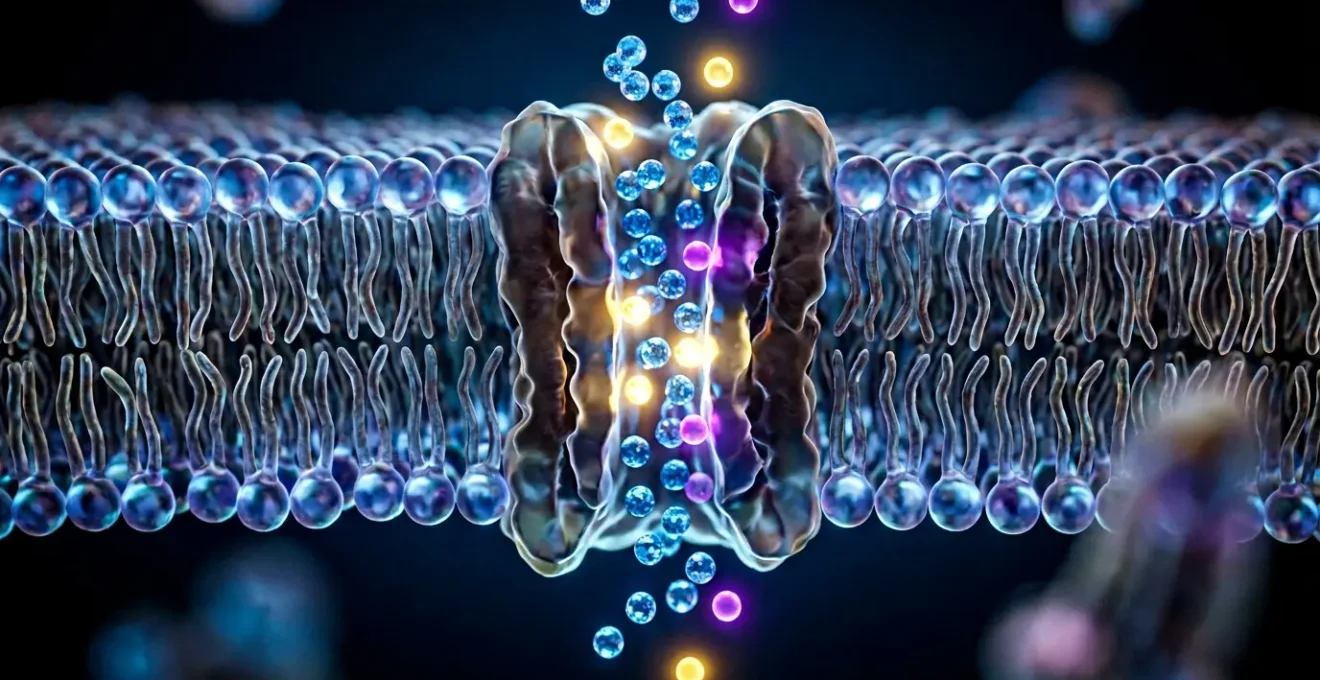
The volume of water you drink is meaningless if your cells cannot absorb it; true hydration is a molecular process governed by electrolytes, not just fluid intake.
- Plain water lacks the sodium and potassium required to cross the cell membrane, leading to frequent urination and persistent thirst.
- Water from foods like cucumbers (“gel water”) is more bioavailable, and a morning glass of salted water kickstarts your body’s absorption mechanisms.
Recommendation: Shift your focus from “drinking more” to “absorbing better” by adding essential minerals to your water and eating water-rich foods.
You dutifully carry your 2-litre water bottle everywhere. You sip consistently throughout the day, hitting your target of 3 litres or more. You’re doing everything right according to conventional wisdom. Yet, the paradox remains: you’re perpetually thirsty, your urine is clear but frequent, and you lack that feeling of deep, sustained energy. If this scenario feels familiar, you’re not alone. You are experiencing the frustrating gap between intake and actual, cellular hydration.
The common advice to simply “drink more water” overlooks a fundamental biological principle. The problem isn’t the volume of water you’re drinking; it’s the volume your body is *absorbing* at a cellular level. Without the correct molecular “keys,” that water simply flushes through your system, taking valuable minerals with it and leaving your cells wanting. This is not a failure on your part, but a misunderstanding of how hydration truly works. It’s an intricate dance of osmotic pressure, cellular pumps, and electrolyte balance.
This article will deconstruct the myth of volume-based hydration. We will move beyond the superficial advice and delve into the molecular mechanisms that govern water absorption. We’ll explore why sodium is not the enemy, how “eating” your water can be more effective than drinking it, and how to precisely compensate for dehydrating habits. By understanding these principles, you can transform your hydration strategy from a high-volume, low-impact chore into a targeted, highly effective wellness practice.
To navigate this deep dive into cellular hydration, we will cover the essential pillars of effective absorption. The following sections will provide a clear roadmap from the foundational science to practical, daily application.
Summary: Unlocking the Secrets of Cellular Hydration
- Sodium and Potassium: Why Plain Water Isn’t Enough for Absorption?
- Why Is Drinking Salted Water the First Thing to Do in the Morning?
- Cucumber vs Water: Why ‘Eating’ Your Water Is Better for Cells?
- Coffee and Alcohol: How Much Extra Water Do You Need to Compensate?
- How Dehydration of Just 2% Drops Your Focus by 20%?
- How to Chew Your Way to 30% Better Nutrient Absorption?
- Hypoglycaemia or Panic Attack: How to Tell the Difference?
- How to Maintain Nutritional Balance on a Tight UK Supermarket Budget?
Sodium and Potassium: Why Plain Water Isn’t Enough for Absorption?
The core of the hydration paradox lies at the membrane of every cell in your body. Think of your cells as exclusive clubs with tightly controlled entrances. Plain water arrives at the door, but it often can’t get in without a specific invitation. That invitation is delivered by electrolytes, primarily sodium and potassium. These minerals create an electrical and chemical gradient—an osmotic gradient—that actively pulls water from your bloodstream into your cells where it’s needed most. Without sufficient electrolytes, water remains “extracellular,” leading to the frustrating cycle of drinking, bloating, and frequent urination without quenching cellular thirst.
This process is managed by a microscopic mechanism known as the sodium-potassium pump. These pumps are proteins embedded in cell walls, and they work tirelessly to maintain fluid balance. In fact, this process is so vital that research from the National Academy of Sciences reveals that these pumps can use up to 20-40% of a cell’s total energy budget (ATP) just to operate. When you drink large volumes of plain, demineralised water, you dilute the concentration of these crucial electrolytes in your body, making it harder for these pumps to function effectively. The water simply has no “escort” to guide it into the cells.
The importance of this mineral balance extends to our very ability to think and function, as neuroscientist Dr. Andrew Huberman explains:
Neurons signal to one another by way of electricity, through something called the action potential, and that actually requires sodium and potassium and magnesium.
– Dr. Andrew Huberman, Huberman Lab Podcast – Using Salt to Optimize Mental & Physical Performance
This highlights that proper hydration is not just about fluid, but about providing the raw materials for cellular communication and energy. While a 1:1 sodium-to-potassium ratio is often discussed, research supporting performance-focused electrolyte formulations has explored different balances. For instance, the science behind the LMNT electrolyte mix points to a ratio closer to 5:1 sodium to potassium (1000mg sodium to 200mg potassium) as being optimal for enhancing both mental and physical function by ensuring the “cellular gateway” is fully operational.
Why Is Drinking Salted Water the First Thing to Do in the Morning?
Waking up after 6-8 hours of sleep, your body is in a natural state of dehydration. During the night, you lose water through respiration and perspiration, with no intake to replenish it. Simultaneously, your body undergoes a critical hormonal shift known as the Cortisol Awakening Response (CAR). Neuroscience research indicates that upon waking, cortisol levels rise by 50-60%. This surge is designed to mobilize energy and increase alertness, but it also accelerates the use and excretion of sodium. Drinking a large glass of plain water in this state can further dilute sodium levels, exacerbating the dehydration at a cellular level and potentially leading to morning brain fog and fatigue.
Consuming a glass of salted water first thing in the morning directly counteracts this. The small amount of sodium acts as the “key” your body desperately needs, opening the cellular gateways to allow water to be absorbed effectively. This isn’t about drinking salty brine; it’s about adding a trace amount of unrefined salt (like Himalayan or sea salt, which contain other trace minerals) to your first glass of water. This simple act replenishes the sodium lost overnight, supports the adrenal system’s response to the cortisol spike, and ensures that the water you drink is pulled into your cells rather than being immediately flushed out by the kidneys. It is the most efficient way to switch your body from a state of overnight dehydration to one of active, cellular hydration.
Action plan: The Morning Hydration Protocol
- Add 1/8 teaspoon (approximately 600mg) of Himalayan pink salt to 1 litre of water.
- Mix thoroughly and let it dissolve for 30 seconds.
- Drink 16-20 ounces (about 500ml) within the first 30 minutes of waking.
- Wait 15-30 minutes before consuming caffeine to maximize absorption and avoid its diuretic effect.
- Follow this with regular water intake throughout the day as needed.
This morning ritual sets the stage for optimal hydration for the rest of the day, turning your first glass of water from a simple flush into a powerful tool for rehydration and cellular function.
Cucumber vs Water: Why ‘Eating’ Your Water Is Better for Cells?
While we are conditioned to think of hydration as something we drink, a significant portion comes from what we eat. The American Heart Association reports that about 20% of an adult’s daily water intake comes from food. But the water in foods like cucumbers (96% water), watermelon (92%), or celery is fundamentally different and, in many ways, superior to the water from your tap. This is because it is “structured water,” also known as gel water or H3O2.
Inside the cells of a plant, water is not free-flowing. It is organized into a crystalline, gel-like structure by the hydrophilic surfaces of the plant’s cells and its fibrous matrix. This pre-structured water is more bioavailable to our bodies. When you eat a cucumber, you’re not just getting H2O; you’re consuming water that is already packaged with electrolytes, fibre, and nutrients, all held in a structure that the body can absorb more slowly and effectively. This slow-release mechanism prevents the rapid flushing effect associated with drinking large volumes of plain water and allows for deeper, more sustained cellular hydration.
As the illustration of a cucumber’s cross-section suggests, the water is intrinsically bound within a cellular network. This matrix slows down its passage through the digestive system, giving your body more time to absorb it fully. Furthermore, this “gel water” carries the plant’s natural electrolytes and nutrients with it, delivering a complete hydration package directly to your cells. This is why eating a salad can sometimes feel more hydrating than chugging a bottle of water. You are providing your body with water in its most natural, absorbable form.
Coffee and Alcohol: How Much Extra Water Do You Need to Compensate?
It’s common knowledge that coffee and alcohol are diuretics, but understanding *how* they cause dehydration is key to properly compensating for their effects. They disrupt your body’s hydration balance through distinct molecular pathways. Ignoring these mechanisms while trying to hydrate is like trying to fill a bucket with a hole in it; your efforts will be largely inefficient.
Alcohol’s primary dehydrating action is the suppression of a crucial hormone called Antidiuretic Hormone (ADH). ADH’s job is to tell your kidneys to reabsorb water. When you drink alcohol, ADH production is blocked, so your kidneys go into overdrive, flushing water directly to your bladder. This is why you urinate so frequently when drinking, and the effect is significant. For every standard alcoholic drink, you can lose far more fluid than you consumed. Caffeine, particularly in individuals not habituated to it, has a milder diuretic effect. It primarily works by increasing blood flow to the kidneys, which can speed up filtration, but it doesn’t suppress ADH in the same way as alcohol.
Compensating is not as simple as drinking an equal volume of water. You must account for the additional fluid loss and the electrolytes that are flushed out with it. The following table provides a practical guide for offsetting the diuretic effects of these common beverages.
| Substance | Mechanism | Water Loss | Compensation Needed |
|---|---|---|---|
| Alcohol | Suppresses ADH (antidiuretic hormone) | Significant (up to 1L per 4 drinks) | 1.5x volume consumed + electrolytes |
| Caffeine | Increases renal blood flow | Mild (primarily in non-habituated users) | 1.5x volume of coffee + touch of sodium |
The key takeaway is that compensation must include both water and electrolytes. After drinking alcohol, rehydrating with an electrolyte solution (like salted water) is far more effective than plain water. For your morning coffee, simply adding a tiny pinch of salt to your pre-coffee water can help offset the mild diuretic effect and prepare your body for better absorption.
How Dehydration of Just 2% Drops Your Focus by 20%?
The sensation of thirst is a lagging indicator of your body’s needs. By the time you feel thirsty, your performance has already begun to decline. The brain, which is approximately 75% water, is exquisitely sensitive to fluctuations in hydration status. Even a mild level of dehydration can significantly impair cognitive function, affecting everything from your mood to your memory and concentration.
This isn’t just a subjective feeling of being “off.” A comprehensive meta-analysis published in the Journal of the American College of Nutrition found that being dehydrated by just 2% of your body weight impairs performance in tasks that require attention, psychomotor skills, and immediate memory. This level of dehydration is common and can be reached easily after a light workout or a busy morning without adequate fluid intake. For a 150-pound (68kg) person, a 2% loss is just 3 pounds (1.4kg) of water weight, yet it can correlate with a startling drop in cognitive horsepower. The effect is most pronounced on tasks requiring sustained attention, which is why you may find yourself easily distracted or unable to focus when you’re even slightly dehydrated.
This effect is not limited to extreme conditions. A recent 2024 longitudinal study on middle-to-older aged adults confirmed that even mild, everyday dehydration (drinking to thirst, or “ad libitum”) was significantly associated with poorer performance on sustained attention tasks. The brain tissue can literally shrink away from the skull due to water loss, increasing the effort required for neural networks to fire. Rehydrating effectively—with electrolytes to ensure cellular uptake—restores the brain to its optimal volume and allows for fluid, efficient cognitive processing. It’s the difference between running your brain’s operating system on a full battery versus one that’s in the red.
How to Chew Your Way to 30% Better Nutrient Absorption?
The path to superior hydration and nutrient absorption begins not in the stomach, but in the mouth. The simple, often-overlooked mechanical act of chewing is the first and most critical step in unlocking the bioavailability of the water and nutrients contained in your food. When we eat water-rich foods like fruits and vegetables, we are consuming “structured water,” but it is locked within a fortress of fibrous plant cell walls.
Thoroughly chewing each bite—aiming for 20 to 30 chews—serves two primary functions. First, it mechanically pulverizes these tough cellulose walls, physically liberating the gel-like water and the nutrients held within. Without this initial breakdown, much of this valuable content can pass through your digestive system unabsorbed. Second, the process of chewing signals the rest of the digestive system to prepare for action. It stimulates the production of saliva, which contains enzymes that begin the chemical breakdown of food, and it prompts the stomach to secrete the acids and enzymes necessary for the next phase of digestion.
Rushing through meals or swallowing food that is not properly masticated is a missed opportunity for hydration and nutrition. By taking an extra 10-15 seconds with each bite of cucumber, apple, or lettuce, you are essentially pre-digesting your food. This maximizes the surface area available for your digestive enzymes to work on, leading to a potential increase in nutrient absorption by up to 30%. This mindful practice transforms a simple meal into a highly efficient hydration and refuelling session, ensuring that every gram of water-rich food you consume delivers its maximum cellular benefit.
Hypoglycaemia or Panic Attack: How to Tell the Difference?
The body’s warning signals for distress can be confusingly similar, and the symptoms of severe dehydration often overlap with those of other conditions like hypoglycaemia (low blood sugar) or even a panic attack. A rapid heartbeat, dizziness, sweating, confusion, and a feeling of weakness can be triggered by any of these three states, leading to uncertainty and anxiety about the root cause. Distinguishing between them is crucial for taking the right corrective action.
The key differentiators often lie in the onset and context of the symptoms. Dehydration symptoms typically develop more gradually over time, often preceded by thirst, a dry mouth, and dark urine. Hypoglycaemia, on the other hand, can occur rapidly, especially in individuals with diabetes or after a period of fasting or intense exercise, and is often accompanied by intense hunger or cravings. A panic attack is characterized by its sudden, overwhelming onset, usually peaking within minutes, and is dominated by an intense feeling of fear or impending doom that may not be present with the other two conditions.
Because these symptoms can be so intertwined, a simple hydration test can often provide clarity. Slowly drinking a glass of water containing a pinch of salt and a small amount of sugar addresses both potential dehydration and mild low blood sugar. If symptoms begin to improve within 15-20 minutes, it’s a strong indicator that an electrolyte and fluid imbalance was a primary contributor. However, if symptoms worsen or are accompanied by chest pain or severe confusion, it is always essential to seek immediate medical advice.
Key takeaways
- True hydration is about cellular absorption, which requires electrolytes like sodium and potassium, not just water volume.
- Start your day with salted water to counteract overnight dehydration and support your body’s hormonal rhythm.
- “Eating your water” through foods like cucumbers provides structured, more bioavailable water that hydrates more effectively than plain water.
How to Maintain Nutritional Balance on a Tight UK Supermarket Budget?
Achieving optimal hydration with the right electrolyte balance does not require expensive, branded sports drinks or supplements. In fact, it can be done incredibly affordably with a few smart choices at a typical UK supermarket. The key is to focus on simple, whole ingredients and leverage the resources readily available.
Commercial electrolyte drinks are often packed with sugar and artificial ingredients, and their cost can add up quickly. A powerful and effective homemade oral rehydration solution can be made for a fraction of the price. A cost analysis from hydration experts shows that homemade oral rehydration solutions using table salt and Lo-Salt can cost approximately £0.02 per serving, compared to the £1-£2 price tag of their commercial counterparts. All you need is standard own-brand table salt (sodium chloride) and a product like Lo-Salt (which is a mix of sodium and potassium chloride), both available for under £2 at supermarkets like Tesco or ASDA for a supply that will last months.
To “eat” your water on a budget, focus on seasonal UK vegetables which are often cheaper and more nutrient-dense. Cabbage (88% water), courgettes (95% water in summer), and even the humble potato (an excellent source of potassium) are cost-effective choices. Buying frozen fruits and vegetables is another excellent strategy, as they are picked at peak ripeness, retain their nutrients and hydration properties, and are significantly cheaper than fresh, out-of-season produce. Finally, always choose tap water over bottled; UK tap water is of high quality, safe, and already contains trace minerals that contribute to your overall electrolyte balance.
Frequently Asked Questions on The Science of Hydration
What are the overlapping symptoms between dehydration, hypoglycemia, and panic attacks?
All three conditions can cause rapid heartbeat, sweating, dizziness, confusion, and weakness. The key difference is that dehydration symptoms develop gradually, hypoglycemia occurs rapidly after meals or fasting, and panic attacks have a sudden onset with intense fear.
How can a simple hydration test help identify the cause?
Slowly consume 8oz of water with a pinch of salt and a small amount of sugar. If symptoms improve within 15-20 minutes, dehydration and/or mild hypoglycemia were likely contributing factors.
When should someone seek immediate medical attention?
If symptoms worsen despite hydration attempts, if there’s chest pain, severe confusion, or loss of consciousness, immediate medical evaluation is necessary to rule out serious conditions.