
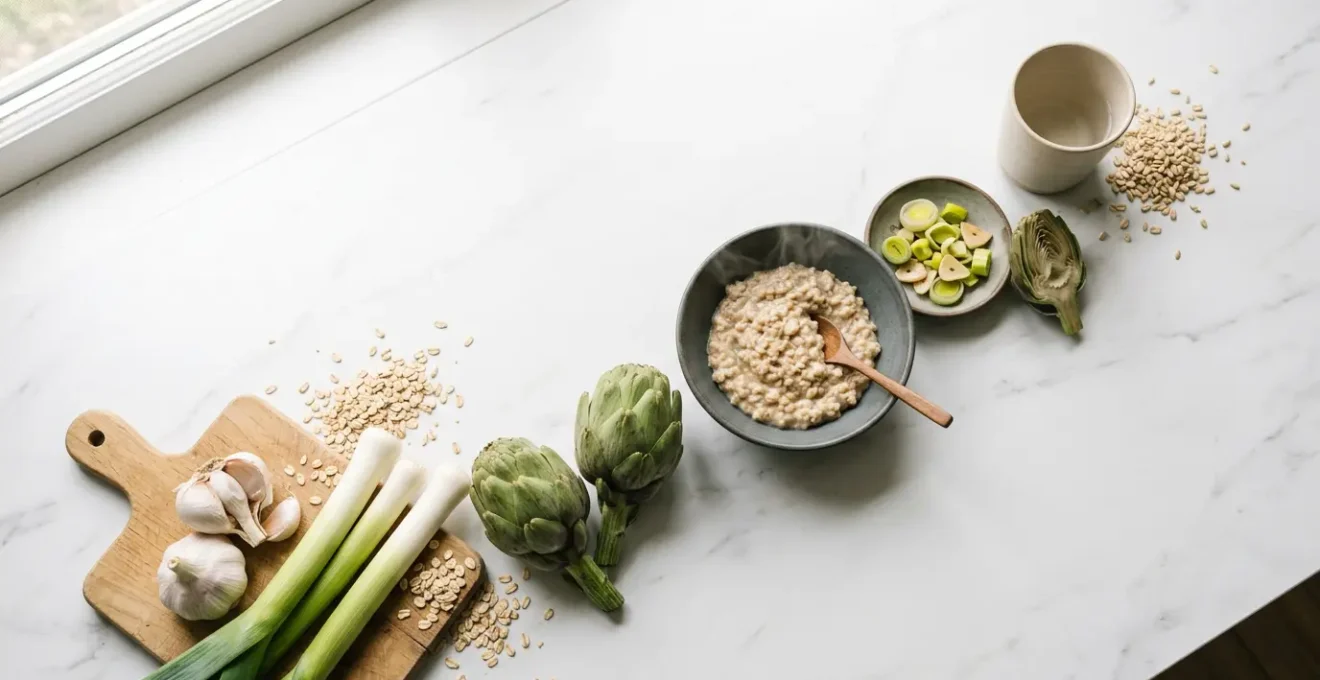
Contrary to popular belief, a thriving gut isn’t about endlessly adding more ‘seeds’ (probiotics). The real, sustainable secret to long-term digestive wellness and even mental clarity is to diligently ‘fertilise the soil’ you already have with prebiotics—powerful fibres found in surprisingly cheap and common UK foods. This shift in focus from adding bacteria to feeding them is the true key to unlocking your gut’s potential.
If you’re a health-conscious individual, you’ve likely spent a fair bit of money on probiotic yoghurts, drinks, and supplements. You’ve been told that adding “good bacteria” is the key to a happy gut. Yet, perhaps you still struggle with bloating, unpredictable digestion, or a general sense that things aren’t quite right. The wellness industry has focused heavily on selling us the ‘seeds’ for our internal garden, but has neglected the most crucial element: the soil.
The common advice to simply “take probiotics” is a platitude that overlooks a fundamental biological truth. A healthy gut is a complex ecosystem. You can’t just keep scattering seeds onto barren, unfertilised ground and expect a lush garden to grow. The real, lasting change comes from nourishing the trillions of microbes already residing within you, turning your gut into a fertile environment where the good bacteria can thrive naturally. This is where prebiotics come in.
But what if the most potent ‘fertiliser’ wasn’t an expensive powder or a niche health food, but was already sitting in your kitchen pantry? This is the core revelation we will explore. We’re going to shift the perspective from the supplement aisle to the supermarket aisle. The key isn’t adding more bacteria, but strategically feeding the ones you have. This approach is not only more effective for long-term health but also significantly more affordable and sustainable.
This guide will walk you through the practical science of becoming a ‘microbiome gardener’. We will uncover the prebiotic power hidden in everyday staples, from the humble onion to leftover pasta, providing you with actionable, UK-specific strategies to cultivate a truly resilient and healthy gut ecosystem from the inside out.
Summary: Your Guide to Cultivating a Healthier Gut Ecosystem
- Garlic and Onions: Why These humble Kitchen Staples Are Gut Superfoods?
- How to Turn Your Leftover Pasta into a Powerful Prebiotic Meal?
- Oats or Bran: Which Fibre Type Is Best for Your Specific Digestive Issue?
- The Bloating Mistake That Makes New Vegans Quit Within a Month
- How to Use Beta-Glucans to Lower Cholesterol Naturally?
- How to Eat 30 Different Plants a Week Without Spending a Fortune?
- Why Cooling Your Potatoes Before Eating Them Changes Their Impact Completely?
- Why Is Your Gut Health the Secret Key to Managing Anxiety?
Garlic and Onions: Why These humble Kitchen Staples Are Gut Superfoods?
In the world of microbiome gardening, garlic and onions are not mere flavour enhancers; they are fundamental soil conditioners. These kitchen essentials are packed with a type of prebiotic fibre called fructans, particularly a powerful one known as inulin. When your gut bacteria feast on these fructans, they produce beneficial compounds that nourish your gut lining and support your entire system. A recent Harvard Health study found that consuming foods high in inulin can significantly boost beneficial bacteria like Bifidobacterium. Think of it as adding a rich, organic compost to your internal garden.
The beauty of these alliums is their accessibility and affordability in any UK supermarket. However, how you buy, store, and cook them matters for preserving their prebiotic power. Boiling can cause some of the beneficial compounds to leach out into the water, so light sautéing, roasting, or enjoying them raw (if you dare!) is often best. It’s about making small, intentional tweaks to your daily habits to turn your meals into a consistent source of gut fertiliser.
To maximise their benefits, consider these practical UK-centric tips:
- Buy leeks when they are in peak season (October-April in UK markets) for the best price and quality.
- Store garlic in a cool, dark, and dry place—not the fridge—to preserve its potent prebiotic fructans.
- Choose firm, heavy onions and store them at room temperature away from potatoes.
- Forage for wild garlic in UK woodlands between March and May, using just the leaves for a seasonal prebiotic boost.
- Roast or sauté alliums over medium heat to retain more of their prebiotic compounds compared to boiling.
By treating these staples with the respect they deserve, you move beyond flavour and into the realm of functional nourishment, laying the foundational soil health for your entire gut ecosystem.
How to Turn Your Leftover Pasta into a Powerful Prebiotic Meal?
The concept of using leftovers to actively improve your gut health might sound too good to be true, but it’s grounded in fascinating food science. The secret lies in a process called starch retrogradation. When you cook and then cool starchy foods like pasta, potatoes, or rice, their molecular structure changes. A portion of the digestible starch transforms into resistant starch, a type of prebiotic fibre that your body can’t break down, but your gut bacteria absolutely love.
This means that the cold pasta salad you prepare for your office lunch is, biochemically speaking, a completely different food than the hot pasta you ate for dinner the night before. By simply chilling your leftovers, you are “upcycling” a simple carbohydrate into a powerful prebiotic meal. You’re not just saving time and money; you’re actively creating a specific type of fertiliser that promotes a healthy balance of gut flora. This is the ultimate kitchen hack for the savvy microbiome gardener.
As you can see in the prepared meals, this process doesn’t require any fancy equipment or exotic ingredients. A simple act of planning and cooling transforms your meal prep. By incorporating cooled pasta into a salad with fresh vegetables and a healthy dressing, you’re delivering a one-two punch of prebiotic fibre and micronutrients, creating a perfect, balanced meal for both you and your gut microbes.
Oats or Bran: Which Fibre Type Is Best for Your Specific Digestive Issue?
Once you’ve committed to fertilising your gut garden, you’ll quickly realise that not all fertilisers are the same. Just as a gardener uses different feeds for roses and vegetables, you must choose the right type of fibre for your specific health goals. Oats and bran are both excellent sources of prebiotics readily available in any UK supermarket, but they serve slightly different purposes within your gut ecosystem.
Oats are rich in a soluble fibre called beta-glucan. When you eat porridge, this fibre forms a gel-like substance in your gut. This process helps to slow digestion, keeping you feeling full and providing a sustained release of energy. More importantly, it’s particularly effective at binding to cholesterol and helping to remove it from the body. Wheat bran, on the other hand, is predominantly insoluble fibre. It doesn’t dissolve but instead adds bulk to your stool, which can be incredibly effective for promoting regularity and preventing constipation. It acts more like a “scrubbing brush” for your digestive tract.
Choosing between them isn’t about one being “better” but about selecting the right tool for the job. Are you looking to manage cholesterol and energy levels, or is your primary concern regularity? The following table breaks down common UK oat and bran products to help you make an informed choice.
UK Supermarket Fiber Products Comparison Guide
This table compares common fibre products found in UK supermarkets, highlighting their main fibre type and best use case, based on published analysis of different fibre sources.
| Product Type | Main Fiber | Best For | Serving Size |
|---|---|---|---|
| Scottish Porridge Oats | Beta-glucans (soluble) | Cholesterol reduction | 40g = 1.6g beta-glucan |
| Jumbo Oats | Beta-glucans (soluble) | Sustained energy | 50g = 2g beta-glucan |
| Oat Bran | Mixed (soluble/insoluble) | Overall gut health | 15g = 2.2g beta-glucan |
| Wheat Bran (All-Bran) | Insoluble fiber | Constipation relief | 30g = 10g fiber |
A crucial word of caution for any aspiring microbiome gardener: introduce new, high-fibre foods slowly. A sudden increase can lead to bloating and discomfort as your gut ecosystem adapts. This gradual process, sometimes called fibre titration, is key to success.
The Bloating Mistake That Makes New Vegans Quit Within a Month
One of the most common and discouraging experiences for people transitioning to a plant-based diet is the sudden onset of severe bloating and gas. They fill their shopping trolley with healthy beans, lentils, and chickpeas, only to feel uncomfortable and disillusioned within weeks. This often leads them to abandon their new lifestyle, believing their body simply can’t handle legumes. However, the problem usually isn’t the beans themselves, but a simple, avoidable mistake.
The culprit is often the liquid in the tin, known as aquafaba. While celebrated in vegan baking as an egg substitute, this liquid is also full of oligosaccharides—complex sugars that are highly fermentable. When consumed in large quantities, especially by a gut not yet adapted to them, they can cause a rapid production of gas, leading to painful bloating. Many new vegans, unaware of this, simply drain the liquid partially and cook the beans, consuming a huge dose of these gas-producing compounds.
The Aquafaba Gas Trap and the 30-Second Solution
Many new vegans, aiming to improve their health, fall into the “aquafaba trap” by not properly preparing tinned legumes. As highlighted by nutrition experts who study digestive health, the liquid in tinned beans (aquafaba) is rich in rapidly fermenting oligosaccharides. A simple, yet profoundly effective, intervention is to rinse tinned legumes thoroughly under cold running water for at least 30 seconds. This single action can reduce the gas-producing compounds by up to 40%, making the transition to a plant-rich diet significantly more comfortable and sustainable.
This simple act of rinsing is a perfect example of the microbiome gardener’s approach. It’s not about avoiding a food group entirely, but about understanding how to prepare it to best support your digestive system. It’s a small, practical piece of knowledge that can make the difference between giving up and successfully cultivating a diverse, plant-rich diet for long-term health.
How to Use Beta-Glucans to Lower Cholesterol Naturally?
For those specifically looking to improve their cardiovascular health, beta-glucans are a specialist fertiliser for your gut garden. As we touched on earlier, this type of soluble fibre, found abundantly in oats, barley, and shiitake mushrooms, is scientifically recognised for its cholesterol-lowering effects. The European Food Safety Authority (EFSA) confirms that consuming just 3 grams of beta-glucans per day can lead to a significant reduction in LDL (“bad”) cholesterol.
The mechanism is elegant. The beta-glucans form a viscous gel in the gut, which essentially traps cholesterol-containing bile acids, preventing their reabsorption and forcing your body to draw more cholesterol from the blood to produce new bile. It’s a natural, food-based intervention with proven results. The challenge for most people is understanding how to consistently get those 3 grams from everyday foods available in the UK.
Achieving this target doesn’t mean eating endless bowls of plain porridge. As the image suggests, you can get creative. A breakfast combining a bowl of porridge with some pan-fried shiitake mushrooms can provide a substantial portion of your daily goal in one delicious meal. The key is knowing the beta-glucan content of different products so you can mix and match throughout the day.
Your UK Guide to Reaching the 3g Beta-Glucan Target
Hitting the daily 3g beta-glucan target for cholesterol reduction requires a strategic approach to your shopping list. This table, based on data from studies analysing beta-glucan content in consumer products, shows how many servings of common UK items you’d need.
| Product | Serving Size | Beta-Glucan Content | Servings for 3g Daily |
|---|---|---|---|
| Quaker Oats | 40g | 1.6g | 2 bowls |
| Oatibix | 2 biscuits (38g) | 1.4g | 4-5 biscuits |
| Oat Bran | 15g (1 tbsp) | 1.1g | 3 tablespoons |
| Shiitake Mushrooms | 100g cooked | 0.8g | Combined with oats |
How to Eat 30 Different Plants a Week Without Spending a Fortune?
The “30 plants a week” challenge is a cornerstone of modern gut health advice. The principle is simple: greater diversity in your plant intake leads to a more diverse and resilient microbiome. Each plant species feeds different types of beneficial bacteria, so a varied diet creates a flourishing and robust internal ecosystem. For many, however, the idea of buying 30 different types of vegetables, fruits, nuts, and seeds seems both expensive and wasteful. The good news is, it doesn’t have to be.
With a strategic, budget-conscious approach, hitting this target is surprisingly achievable, especially in the UK. This is where the concept of the “Plant Point System” comes into play. It’s a simple way to track your intake where every different plant-based food—including herbs and spices—counts as a point. This reframes the goal from buying 30 unique items to cleverly combining them.
The Plant Point System Success Story
The “Plant Point System,” a concept championed by UK nutritionists, has proven highly effective. As noted in reports on practical gut health strategies, participants who embraced this system found it easy to reach 30+ plant points weekly. By leveraging budget-friendly options like supermarket soup packs, frozen vegetable medleys, and living herbs, they not only boosted their dietary diversity but also reported spending up to 20% less on their weekly shop, demonstrating that gut health doesn’t require a premium price tag.
Adopting this mindset involves a few simple shifts in your shopping habits. Instead of buying individual vegetables, you look for pre-mixed bags. Instead of expensive bunches of fresh herbs, you buy a living pot that lasts for weeks. Here are some UK-specific budget strategies:
- Shop the Aldi “Super 6” or similar weekly vegetable rotations at other supermarkets for variety at low prices (often £0.39-£0.69 per item).
- Buy large bags of frozen mixed vegetables or berries; a single bag can contain 5-7 different plant points for around £1.50.
- Invest in living herb pots from the windowsill section of supermarkets (£1.29 each) for a continuous supply.
- Purchase seasonal soup packs, which often contain 6-8 different vegetables for £1-£2.
- Don’t forget dried herbs and spices! A jar of mixed herbs can easily add 3-4 plant points to your weekly count.
Why Cooling Your Potatoes Before Eating Them Changes Their Impact Completely?
The humble potato, a staple of the British diet, holds a remarkable secret that is unlocked by a simple change in temperature. As we discovered with pasta, cooling cooked potatoes triggers the process of starch retrogradation, transforming them into a fantastic source of resistant starch. This means your Sunday roast leftovers can be healthier for your gut and blood sugar than the freshly cooked version.
When you eat a freshly cooked, hot potato, its starch is quickly broken down into glucose, causing a rapid spike in blood sugar. However, once that same potato is cooled, a significant portion of that starch crystallises into a form your body can’t digest. This resistant starch travels intact to your large intestine, where it becomes a preferred food source—a high-grade fertiliser—for your beneficial gut bacteria. They ferment it to produce short-chain fatty acids (SCFAs) like butyrate, which is the primary energy source for the cells lining your colon and has powerful anti-inflammatory effects.
Resistant Starch Potential in British Potato Varieties
Not all spuds are created equal when it comes to resistant starch. UK-based research has shown that waxy potato varieties like Charlotte and Jersey Royals can form up to 40% more resistant starch upon cooling compared to their floury counterparts like Maris Piper or King Edward. Crucially, the study also found that reheating these cooled potatoes (e.g., leftover roasties warmed in the oven on Monday) retains approximately 85% of their beneficial resistant starch content, making them a superior choice for blood sugar management compared to freshly cooked potatoes.
This insight allows you to be strategic. Use waxy potatoes for your salads and meal prep, and don’t be afraid to cook extra roast potatoes to enjoy reheated the next day. You’re not just eating leftovers; you’re executing a calculated nutritional strategy.
Your Action Plan: Unlocking Resistant Starch in Potatoes
- Identify Potato Types: First, list the potatoes you typically buy. Distinguish between waxy varieties (Charlotte, Jersey Royals) which are best for resistant starch, and floury types (Maris Piper).
- Inventory Cooking Methods: Review how you cook them. Boiling, baking, and roasting are all effective starting points for creating resistant starch.
- Implement the Cooling Protocol: The crucial step. Confront your habit of eating potatoes hot. The new rule is to cool them completely in the fridge for a minimum of 12 hours to maximise resistant starch formation.
- Appreciate the Transformation: Reframe your perception. The goal is no longer just a “hot, fluffy” potato but a “cool, powerful” prebiotic one. Recognise the added health value in a potato salad or reheated roastie.
- Integrate into Your Routine: Plan your meals. Cook a large batch of new potatoes at the start of the week for salads, or intentionally make extra roasties on Sunday for reheating on Monday and Tuesday.
Key Takeaways
- Prioritise Fertiliser over Seeds: Long-term gut health comes from feeding your existing microbes with prebiotics, not just adding new probiotics.
- Simple Kitchen Hacks Have Big Impact: Actions like cooling starchy foods (pasta, potatoes) and thoroughly rinsing tinned beans are powerful, science-backed ways to boost prebiotics.
- Dietary Diversity is Affordable: Hitting the “30 plants a week” target is achievable on a budget by using UK supermarket strategies like frozen medleys and seasonal vegetable packs.
Why Is Your Gut Health the Secret Key to Managing Anxiety?
For decades, we’ve treated the mind and the gut as two separate entities. Anxiety was a problem for the brain, and digestive issues were a problem for the gut. However, groundbreaking research into the gut-brain axis is revealing an intricate and powerful communication highway between these two systems. Your gut is no longer seen as a simple digestive tube but as a “second brain,” and nurturing its health may be one of the most effective strategies for managing mental well-being.
This connection is profoundly relevant in the UK, where according to Mind charity statistics, roughly 1 in 4 adults experience a mental health problem like anxiety each year. The communication on the gut-brain axis is bidirectional, meaning stress and anxiety can cause digestive upset, but, crucially, an unhealthy gut can also send signals that contribute to anxiety and low mood. By becoming a dedicated microbiome gardener, you are not just improving your digestion; you are actively intervening to support your mental health.
The mechanism is fascinating. When your beneficial gut bacteria ferment prebiotic fibres, they produce short-chain fatty acids (SCFAs). These molecules don’t just stay in the gut; they enter the bloodstream and can have systemic effects.
Short-chain fatty acids produced by gut bacteria when they eat prebiotics can cross the blood-brain barrier and directly influence brain function and reduce neuroinflammation.
– International Scientific Association for Probiotics and Prebiotics, ISAPP Consensus Statement 2026
This means your dietary choices have a direct, chemical impact on your brain. By feeding your gut the right prebiotic fertilisers, you are essentially manufacturing your own calming, anti-inflammatory compounds. This can be supported by combining prebiotic-rich foods with other nutrients known to support mood, such as tryptophan (a precursor to serotonin) in bananas and omega-3s in salmon.
- Breakfast: Porridge (beta-glucans) with sliced banana (inulin and tryptophan).
- Snack: Oatcakes (fibre) with mature cheddar (protein).
- Lunch: Sourdough toast (fermented) with hummus (prebiotics) and rocket.
- Dinner: Salmon (omega-3) with roasted asparagus (prebiotic fibre).
- Evening: Chamomile tea with a small handful of almonds.
Start cultivating your inner garden today. Your journey to better gut health and improved well-being begins not in the supplement aisle, but with the simple, powerful, and affordable foods right in your own kitchen.