
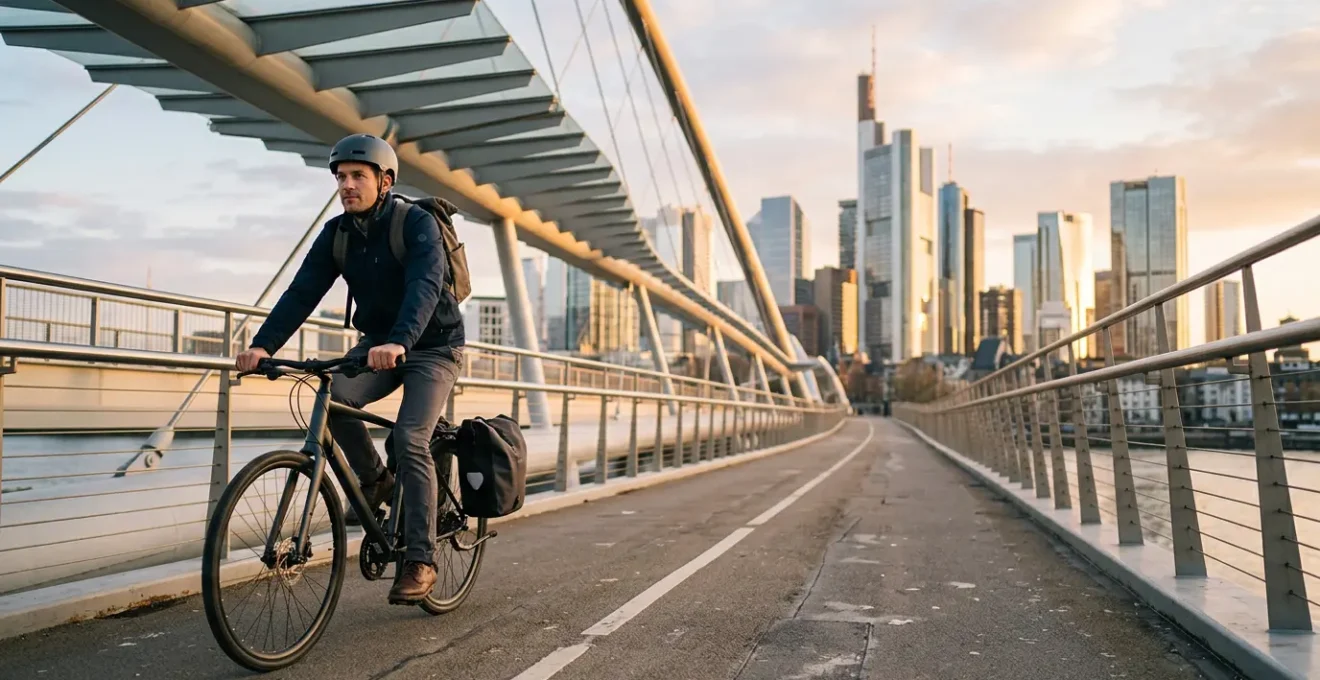
The Cycle to Work scheme is less about the bike and more about building a sustainable fitness system that integrates seamlessly into your existing workday.
- Active commuting consistently beats a gym membership by embedding movement into your non-negotiable daily schedule.
- Long-term success depends on systematically solving small logistical frictions like rain, sweat, and gear, not just on raw motivation.
Recommendation: Shift your focus from the cycle ride alone to designing a complete ‘door-to-door’ movement plan that transforms your entire journey into an opportunity for incidental fitness.
For millions of UK commuters, the daily journey is a source of stress, delays, and expense. The promise of the Cycle to Work scheme offers a tantalising alternative: a tax-efficient way to get a new bike and reclaim that lost time. Many see it as a simple transaction—a cheaper bike and a vague intention to get fitter. The standard advice revolves around the financial savings and the basic health benefits of cardiovascular exercise. This is a solid start, but it misses the bigger picture and the reasons why so many new bikes end up gathering dust after a few weeks.
The real challenge isn’t acquiring the equipment; it’s overcoming the daily, practical barriers that make active commuting feel like a chore. This is the ‘logistical friction’—the small but significant problems of arriving at work soaked, feeling sweaty and unprofessional, or suffering from neck pain due to a poorly chosen bag. These are the details that derail consistency far more than a lack of motivation. True success lies in shifting perspective: stop thinking about ‘exercising’ and start designing a holistic ‘movement system’ for your entire commute.
This approach reframes your journey not as a single bike ride, but as a series of opportunities for incidental fitness. The walk to the station, the choice of an e-bike, the way you carry your laptop—every decision contributes to your overall physical well-being. By focusing on removing logistical friction, you make the healthy choice the easy choice, creating a sustainable habit that doesn’t rely on finding an extra hour for the gym.
This guide provides a practical, consultant-led framework for dismantling those barriers. We will address the most common commuting challenges head-on, providing logistical solutions to transform your journey into the most effective and consistent part of your fitness routine.
Summary: A Practical Framework for Active Commuting Fitness
- Poncho or Jacket: How to Cycle to Work in Rain Without Getting Soaked?
- Baby Wipes or Gym Pass: How to Commute Actively Without Showers at Work?
- Cheating or Smart: Why E-Bikes Might Be Better for Daily Commuting?
- The Rucksack Mistake That Causes Neck Pain for Commuters
- How to Turn Your Walk from the Train Station into a Mini-Workout?
- How to Sneak 40 Minutes of Movement into a 9-to-5 Office Routine?
- Rucking or Running: Which Builds Endurance Without Destroying Knees?
- How to Increase Your Daily Calorie Burn Without Stepping Foot in a Gym?
Poncho or Jacket: How to Cycle to Work in Rain Without Getting Soaked?
The number one piece of logistical friction for UK commuters is the weather. The fear of arriving at the office drenched is a powerful deterrent, but it’s a solvable engineering problem. The choice between a poncho and a dedicated cycling jacket depends on the intensity of the rain and the length of your commute. A poncho offers excellent ventilation and coverage for your legs, making it ideal for short, showery rides. However, in windy conditions, it can act like a sail.
For more committed, all-weather commuters, a technical jacket is a non-negotiable investment. The key is to look for a fabric with a hydrostatic head rating of at least 10,000mm, which is the industry standard for being truly waterproof rather than just ‘shower-resistant’. Breathability is equally important to prevent you from getting soaked from the inside out. Look for features like pit zips for ventilation.
Beyond the jacket, a complete rain-proof system is essential. Your strategy should be about layers and compartmentalisation. Here are the core components of an effective commuter’s rain kit:
- Waterproof Trousers: Lightweight, packable over-trousers are essential for protecting your work attire.
- Base Layers: A merino wool base layer is superb for temperature regulation and its natural anti-odour properties, even when damp.
- Panniers or Dry Bags: Never rely on a ‘water-resistant’ rucksack. Use fully waterproof panniers mounted to the bike’s frame. A budget-friendly alternative is the “dry-bag-in-a-bag” method, using a dedicated dry bag inside your existing rucksack to protect electronics.
- Trouser Protection: Use trouser clips or reflective ankle bands to keep your work trousers away from the greasy chain and dry from road spray.
Ultimately, a successful wet-weather commute is about preparation. Having your rain gear ready to go removes the mental barrier of a grey morning, turning a potential excuse into a minor, manageable detail.
Baby Wipes or Gym Pass: How to Commute Actively Without Showers at Work?
The second major barrier after rain is the “sweat problem.” The lack of shower facilities in many UK offices is a legitimate concern for anyone wanting to arrive feeling fresh and professional. However, this is another piece of logistical friction that can be engineered away without needing a full gym-style changing room. The solution is to create a compact, efficient “commuter’s dopp kit” or “freshen-up kit” that lives permanently in your desk drawer or locker.
This kit allows you to perform a quick and effective ‘tactical wash’ in a standard bathroom stall. It’s about bringing the essentials of a refresh routine to the office in a minimalist format. The goal is to cool down, clean up, and change into your work clothes feeling confident.
As the image illustrates, the key is to use travel-sized products to keep your kit small and discreet. Your personal kit should be tailored to your needs, but a highly effective baseline includes:
- Microfiber Towel: A small, quick-drying sports towel is the cornerstone of the kit. It’s far more effective than paper towels for drying off after a quick wash.
- High-Quality Wet Wipes: Choose large, biodegradable body wipes. They are perfect for a quick clean-up.
- Travel-Sized Deodorant: An obvious but essential component.
- Dry Shampoo: A game-changer for reviving ‘helmet hair’ and absorbing any moisture.
- A Change of Clothes: The most crucial element. Commute in technical gear (e.g., a cycling jersey or technical t-shirt) and change into your work clothes at the office. This keeps your professional attire crisp and sweat-free.
Cultural acceptance is also growing. As more people embrace active travel, arriving with slightly damp hair from rain or a healthy glow from a bike ride is becoming normalised in many workplaces. It is often seen as a sign of a proactive and energetic employee, not an unprofessional one.
Cheating or Smart: Why E-Bikes Might Be Better for Daily Commuting?
A common misconception is that using an electric bike for commuting is ‘cheating’ and negates the fitness benefits. From an active transport consultant’s perspective, this is fundamentally wrong. The goal of an active commute is consistency, and e-bikes are a powerful tool for achieving it. They lower the barrier to entry, flatten hills, and reduce the physical and mental effort required, making it far more likely you’ll ride every day, not just on sunny ones.
The ‘cheating’ myth is also debunked by science. An e-bike doesn’t eliminate effort; it modulates it. You still have to pedal, but the motor assist helps you maintain a steady speed and manage challenging inclines without becoming exhausted or overly sweaty. This keeps you in an ideal cardiovascular zone for sustained health benefits. In fact, a recent Norwegian study demonstrates that on a typical e-bike commute, riders are in a beneficial state of movement; 66-67% of e-bike commuting time is spent in moderate-to-vigorous physical activity zones.
The key difference is the Rate of Perceived Exertion (RPE). With an e-bike, you can be working your heart at a moderate, fat-burning intensity while feeling like you’re putting in only light-to-moderate effort. This psychological advantage is crucial. If a commute feels manageable and even enjoyable, you are exponentially more likely to do it again tomorrow. This makes the e-bike a superior tool for long-term habit formation compared to a conventional bike that might feel daunting on a tired Tuesday morning.
For commuters, this means you can:
- Arrive at work feeling energised but not exhausted or sweaty.
- Tackle longer commutes or routes with significant hills that would be impractical on a regular bike.
- Easily carry heavier loads like laptops and groceries without a major performance penalty.
- Keep up with faster traffic, increasing safety and confidence on busy roads.
An e-bike isn’t cheating; it’s a strategic tool for making daily fitness a practical reality.
The Rucksack Mistake That Causes Neck Pain for Commuters
One of the most common complaints from new cycle commuters is the onset of neck and shoulder pain. The culprit is almost always the same: using a standard, ill-fitting rucksack to carry daily essentials, especially a heavy laptop. When you adopt a forward-leaning cycling posture, the weight of the bag pulls down and backwards, forcing the muscles in your neck and shoulders to constantly strain to counteract the load. This is a significant source of logistical friction that can make commuting a painful experience.
The fundamental solution is to get the weight off your body and onto the bike’s frame. Panniers—bags that clip onto a rack over the rear wheel—are the gold standard for cycle commuting. They lower the centre of gravity, improve stability, and completely eliminate strain on your spine. This single change can be transformative for comfort and enjoyment. Creative DIY solutions, like converting sealed buckets into waterproof panniers, show that this doesn’t have to be an expensive upgrade.
However, if a rucksack is your only option, proper fitting is critical. A cycling-specific rucksack is designed to sit higher on the back and be more stable, but even a standard bag can be adjusted for better ergonomics. The goal is to immobilise the pack so it moves with your torso as one unit, rather than swinging and pulling on your shoulders.
Your Action Plan: Proper Rucksack Fitting for Cyclists
- Positioning: Position the pack high and tight against your thoracic spine (upper/mid-back), not sagging down onto your lower back.
- Stabilisation: Always use both the sternum (chest) strap and the waist strap. Cinch them tightly to prevent the pack from swaying.
- Packing: Pack the heaviest items, like a laptop or books, low in the bag and as close to your back as possible to keep the centre of gravity stable.
- Weight Management: Keep the total weight under 10% of your body weight whenever possible. Chronic pain is often a result of simply carrying too much.
- Alternative Consideration: Seriously consider frame-mounted alternatives like panniers or a large saddlebag for any regular load over 5kg.
Treating your carrying solution as a piece of technical equipment, not an afterthought, is essential for a pain-free commute. Your spine will thank you for it.
How to Turn Your Walk from the Train Station into a Mini-Workout?
For many UK commuters, the journey involves more than just a bike ride. A significant portion of the active commute is often the ‘last mile’—the walk from the train station or bus stop to the office. This segment is frequently overlooked, but it’s a prime opportunity to inject a potent dose of incidental fitness into your day. This is the essence of a “movement system”: every part of the journey contributes. This ‘mixed-mode’ approach is incredibly powerful, as British Heart Foundation research shows that mixed-mode commuters who walk and use public transport enjoy a 24% lower risk of death from all causes.
Instead of a leisurely stroll, you can transform this walk into a form of High-Intensity Interval Training (HIIT) or a strength-building session known as ‘rucking’ (walking with a weighted backpack). The goal is to elevate your heart rate and engage your muscles in a way that a normal walking pace does not.
The urban environment is your gym. Stairs, curbs, and even slight inclines can be used to increase the intensity and effectiveness of this mini-workout. A structured approach can turn a 10-minute walk into a significant calorie-burning and muscle-toning activity.
A simple but effective protocol to follow is the “Station Walk Power-Up”:
- Interval Bursts: Instead of a steady pace, alternate between 3-5 minutes of power walking (as fast as you can without jogging, with an exaggerated arm-swing) and 2 minutes of normal-paced recovery.
- Add Gradual Weight: Your work rucksack is the perfect tool. Start with just your laptop and a full 2L water bottle, which adds around 3kg. This is the essence of ‘rucking’.
- Use Urban Features: Don’t just wait at traffic lights. Use the time to do calf raises on the curb. Actively seek out stairs instead of escalators and take them two at a time if possible.
- Track and Gamify: Use a simple fitness app like Strava on your phone to track your walking segments. Competing against your own time can be a powerful motivator to keep the intensity high.
This approach doesn’t add any extra time to your commute, but it multiplies the fitness benefits you get from it.
How to Sneak 40 Minutes of Movement into a 9-to-5 Office Routine?
The UK Chief Medical Officers’ guidelines recommend at least 150 minutes of moderate-intensity activity per week. For a 5-day work week, this breaks down to just 30 minutes per day. The beauty of an active commute is that it seamlessly integrates this requirement into your schedule. The typical UK cycle commute provides the perfect structure for this, creating what can be called the ’20-minute sandwich’.
This concept involves ‘sandwiching’ your sedentary workday between two 20-minute blocks of moderate-intensity movement. For example, a 20-minute cycle to the station in the morning and a 20-minute cycle home in the evening easily accumulates 40 minutes of daily activity. This approach is psychologically powerful because it doesn’t require carving out a separate ‘gym session’. The movement is simply part of the non-negotiable act of getting to and from work.
The effectiveness of this model is proven by data from UK employers. A comprehensive analysis of 40,000 employers participating in the Cyclescheme revealed a tangible business benefit directly linked to this daily habit. According to the analysis, employees who regularly cycle to work take, on average, 1.3 fewer sick days annually. This demonstrates that the ’20-minute sandwich’ is not just a theoretical concept but a practical strategy that yields measurable improvements in health and resilience. Nearly all participants in the scheme reported that this split routine feels more sustainable than a gym membership they struggle to use.
Furthermore, even a modest commute delivers significant results. Data indicates that the average UK cycle commute of 5.5 miles burns approximately 300 calories each way. That’s 600 calories integrated into your day before you even think about dedicated exercise. The key is to see your commute not as wasted time, but as your primary, non-negotiable fitness slot.
Rucking or Running: Which Builds Endurance Without Destroying Knees?
For commuters looking to maximise the fitness potential of their journey on foot, the choice often comes down to running versus ‘rucking’—the practice of walking with a weighted rucksack. While running is often seen as the default for cardiovascular fitness, it is a high-impact activity that can be punishing on the joints, particularly for individuals who are de-conditioned or carrying extra weight. Rucking presents a highly effective, low-impact alternative that is arguably better suited to the demands of a daily commute.
From a biomechanical perspective, running subjects the knees to impact forces of up to three times your body weight with every stride. Rucking, being a form of walking, is a low-impact activity. The added weight increases the cardiovascular demand and calorie burn significantly, bringing it closer to that of running, but without the associated joint stress. For an office worker, this is a critical distinction. An injury from running can derail your entire fitness plan, whereas rucking is a sustainable, long-term strategy for building endurance.
Furthermore, rucking offers unique postural benefits. When done correctly with the weight carried high on the back, it actively engages the muscles of the upper back and core to support the load. This can help counteract the ‘forward-head’ posture common among desk workers. The following table breaks down the key differences for a commuter:
| Factor | Rucking (Walking with Weight) | Running |
|---|---|---|
| Impact on Joints | Low impact | High impact (3x body weight) |
| Calories Burned (30 min) | 250-400 kcal | 300-500 kcal |
| Posture Benefits | Improves forward-head posture | May exacerbate desk posture |
| Equipment Cost | £0 (use work backpack) | £100+ (proper running shoes) |
| Weather Sensitivity | Low (can use umbrella) | High (gets soaked) |
| Office Arrival State | Professional appearance | Requires shower/change |
This logistical and physiological superiority makes rucking a clear winner for most commuters. As experts from the British Journal of Sports Medicine note, it’s a more accessible and functional form of exercise for this demographic.
For the target audience of likely de-conditioned office workers, rucking is the clear winner. Frame it as ‘cardio with benefits’: it’s low-impact, builds functional strength and bone density.
– British Journal of Sports Medicine, Exercise Guidelines for Office Workers 2024
Key Takeaways
- Consistency over intensity is the golden rule; a daily 20-minute e-bike ride is superior to a single, grueling 2-hour weekend ride.
- Smart, low-impact alternatives like e-biking and rucking are not ‘cheating’; they are strategic tools for long-term joint health and habit formation.
- Your entire commute is a workout opportunity. Optimising the ‘in-between’ moments—like the walk from the station—is key to maximising your daily calorie burn.
How to Increase Your Daily Calorie Burn Without Stepping Foot in a Gym?
The ultimate goal of an active commute is to integrate significant physical activity into your life so seamlessly that the gym becomes redundant. This is achieved by maximising what exercise scientists call NEAT (Non-Exercise Activity Thermogenesis)—the calories you burn from all the movement you do that isn’t formal exercise. Your commute is the single biggest opportunity to boost your NEAT.
By combining the strategies we’ve discussed, you can easily build a system that burns an additional 400-500 calories per day without adding any extra time to your schedule. This is the equivalent of a 45-minute spin class or a 5-mile run, but it’s achieved through small, cumulative actions woven into your journey to and from work. This consistent daily calorie deficit is the foundation of sustainable weight management and improved metabolic health.
Let’s map out a sample daily NEAT Maximisation Strategy for a typical UK commuter:
- Morning Cycle: A 20-minute e-bike ride or steady cycle to the train station. (Approx. +150 kcal)
- Station Walk: A 10-minute ‘ruck’ from the station to the office with a laptop bag. (Approx. +80 kcal)
- Office Movement: Consistently choosing the stairs over the lift throughout the day. (Approx. +20 kcal)
- Evening Reverse: Repeating the 10-minute ruck and 20-minute cycle on the journey home. (Approx. +230 kcal)
- Daily Total: A cumulative burn of around 480 calories, achieved simply by getting to and from your job.
This is not just about calorie burn; it’s a profound investment in long-term health. The benefits of making this shift are dramatic. Compelling research confirms that, compared to people who drive or use public transport, regular cyclists have a 41% lower risk of death from all causes, including cardiovascular disease and cancer. By engineering the friction out of your commute, you aren’t just making your day easier; you are fundamentally changing your health trajectory.
The journey to a fitter, healthier life doesn’t have to start in a crowded gym. It can start tomorrow morning, on your doorstep. Begin by auditing your own commute, identify the single biggest piece of logistical friction that holds you back, and apply one of these practical solutions to remove it. That is the first step in building your own personal, sustainable movement system.