
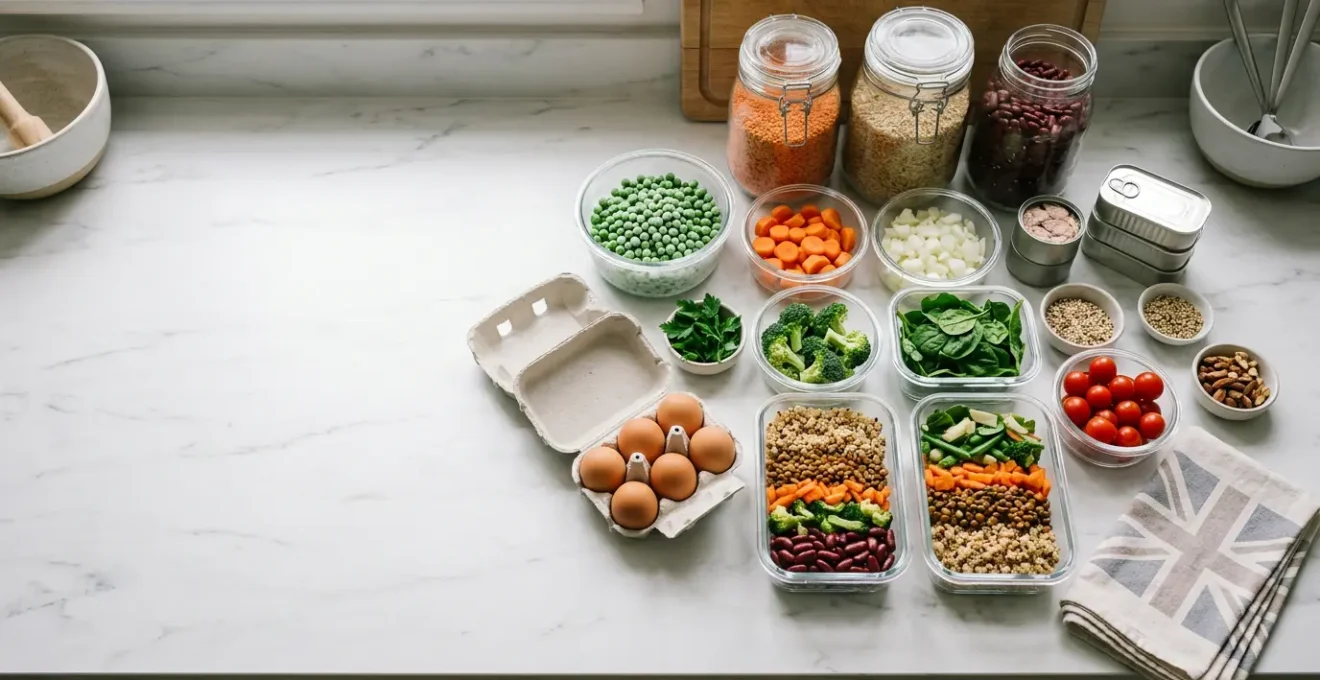
Eating well on a tight UK budget is not about sacrifice; it’s about smart science and maximising the nutritional return on every pound you spend.
- Frozen vegetables are often more nutritious than the ‘fresh’ produce that has been sitting on shelves, especially in winter.
- Plant-based proteins like lentils offer significantly more protein-per-pound than meat, drastically cutting costs while boosting fibre.
- When you eat can be as crucial as what you eat for preventing energy crashes and improving metabolic health.
Recommendation: Start by swapping one ‘fresh’ vegetable on your shopping list for its frozen equivalent—it’s a cheaper, more nutrient-dense, and waste-free first step.
Navigating a UK supermarket with a tight budget and a desire to eat healthily can feel like an impossible task. The rising cost of living pressures us to choose the cheapest options, while our busy lives pull us towards convenient, often unhealthy, ready meals. We’re told to “eat more fresh vegetables” and “cook from scratch,” but this advice often ignores the reality of a wilted, expensive pepper at the back of the fridge and the sheer lack of time or energy after a long commute.
This struggle creates a cycle of frustration. You buy fresh produce with the best intentions, only for it to lose its nutritional value—and your money—by the time you use it. You try to avoid the 3pm energy slump with another coffee, unaware that the timing of your lunch could be the real culprit. You might even have a “healthy” BMI but still feel sluggish and prone to cravings, a sign of underlying metabolic issues that typical dieting advice doesn’t address.
But what if the key wasn’t simply spending less, but getting more nutritional value from every single pound? This guide moves beyond the platitudes. We’ll explore the science behind smart food choices that work with, not against, your budget and lifestyle. We will unpack why frozen peas can be a nutritional powerhouse, how lentils can outperform beef, and how simple timing changes can revolutionise your energy levels. It’s time to learn how to achieve true nutritional balance, not by sacrifice, but by strategy.
This article will provide a practical roadmap to smarter nutritional choices within the UK’s unique food landscape. Below is a summary of the key strategies we will cover to help you eat better for less.
Summary: A Strategic Guide to UK Budget Nutrition
- Why Frozen Vegetables Are Often Superior to ‘Fresh’ Ones in UK Winter?
- How to Meal Prep a Week of Balanced Lunches for Less Than £15?
- Lentils vs Minced Beef: Which Protein Source Offers Better Value per Nutrient?
- The Hidden Sugar Trap in ‘Healthy’ Supermarket Ready Meals You Must Avoid
- When to Eat Your Main Meal to Prevent the 3pm Energy Crash at Work?
- Garlic and Onions: Why These humble Kitchen Staples Are Gut Superfoods?
- Cucumber vs Water: Why ‘Eating’ Your Water Is Better for Cells?
- Why Is Your Metabolic Health Poor Even If Your BMI Is Normal?
Why Frozen Vegetables Are Often Superior to ‘Fresh’ Ones in UK Winter?
One of the biggest misconceptions in nutrition is that “fresh is always best.” While a vegetable picked from your own garden and eaten immediately is nutritionally optimal, the journey of supermarket “fresh” produce is long and damaging. In the UK, especially during winter, many vegetables are transported over long distances, losing vital nutrients with every passing day. This is where frozen vegetables reveal their hidden advantage.
Vegetables destined for the freezer are typically picked at their peak ripeness and “flash-frozen” within hours. This process locks in vitamins and minerals that would otherwise degrade over time. In fact, research shows that frozen vegetables retain similar or higher antioxidant levels compared to their fresh counterparts that have been stored for just three days. This nutrient degradation in fresh produce is significant; for example, a University of Reading analysis highlights that green peas can lose about half of their vitamin C within the first two days after being harvested.
As the image above illustrates, the ice crystals formed during flash-freezing encapsulate the vegetable’s cellular structure, preserving nutrients that are otherwise lost to light, air, and time. For a budget-conscious and health-aware consumer, this makes frozen produce a smarter choice. You get peak nutrition, zero food waste (as you only use what you need), and a much lower price point, making it a cornerstone of efficient, healthy eating.
How to Meal Prep a Week of Balanced Lunches for Less Than £15?
The idea of a weekly meal prep can seem daunting, but it is the single most effective strategy for controlling your lunch budget and nutritional intake. A pre-prepared, balanced meal saves you from last-minute, expensive, and often unhealthy choices from the office canteen or local café. The key to making it work on a shoestring budget of under £15 is to leverage the UK’s budget supermarkets like Aldi and Lidl.
The strategy revolves around “component prepping” rather than cooking five identical meals. On a Sunday, cook a large batch of a versatile grain (like brown rice or quinoa), roast a tray of root vegetables, and prepare a protein source (like a big pot of lentil curry or some baked chicken thighs). Store these components in separate containers in the fridge. Each morning, you can assemble a different “bowl” in minutes: rice, veg, protein, and a handful of fresh spinach. This prevents flavour fatigue and keeps your lunches interesting.
This approach is not only time-efficient but also remarkably cost-effective when you stick to budget supermarkets. Below is a comparison that shows just how much can be saved by avoiding mainstream retailers for your weekly prep ingredients.
| Supermarket | Weekly Cost per Person | Includes 5-a-day | Prep Time |
|---|---|---|---|
| Aldi | £15-20 | Yes | 2 hours |
| Lidl | £15-22 | Yes | 2 hours |
| Tesco/Sainsbury’s | £29-31 | Yes | 2.5 hours |
By focusing your shopping at Aldi or Lidl and buying versatile staples, you can easily hit the under-£15 target for a week of nutritious lunches. It’s about building a pantry of low-cost, high-nutrition staples like dried lentils, brown rice, and tinned tomatoes, and then supplementing with weekly deals on vegetables. This makes healthy eating a default, not a daily decision.
Lentils vs Minced Beef: Which Protein Source Offers Better Value per Nutrient?
Protein is essential for satiety, muscle repair, and stable energy levels, but it’s often the most expensive component of a meal. When we analyse protein sources not just by price per kilo, but by “Nutritional Return on Investment” (N-ROI), a clear winner emerges for the budget-conscious UK consumer: the humble lentil.
Let’s break down the numbers. Minced beef is a UK staple, but its price has risen sharply. In contrast, dried lentils remain one of the cheapest and most nutrient-dense foods available. An analysis from the British Dietetic Association shows that 500g of dried lentils, costing around £1.50, provides approximately 125g of protein. A 500g pack of 20% fat minced beef, costing upwards of £3.50, provides only 100g of protein. You get more protein for less than half the price with lentils.
But the benefits go beyond just protein. Lentils are packed with dietary fibre, which is crucial for gut health and blood sugar regulation and completely absent in meat. They also contain significantly less saturated fat. A practical strategy, recommended by organisations like HEART UK, is the “50/50 blend.” When making dishes like spaghetti bolognese or shepherd’s pie, replace half the minced beef with cooked brown or green lentils. You will instantly reduce the cost, lower the saturated fat, and increase the fibre content of the meal without drastically changing the taste or texture. This small change is a powerful tool for improving both your financial and metabolic health.
The Hidden Sugar Trap in ‘Healthy’ Supermarket Ready Meals You Must Avoid
In the rush of modern life, the supermarket ready meal aisle can seem like a lifesaver. Many are even marketed with “healthy” or “low-fat” labels, luring in time-poor, health-conscious consumers. However, these labels often mask a darker truth: these meals can be nutritional minefields, packed with hidden salt and sugar that sabotage your health goals.
The term “low-fat” is a particularly potent red flag. When manufacturers remove fat, they often add sugar, salt, and artificial flavourings to make the product palatable. This means a ‘low-fat’ pasta bake can send your blood sugar soaring more than its full-fat equivalent. The problem is widespread. For instance, a recent Action on Salt study found that 56% of UK supermarket ready meals are high in salt, contributing to high blood pressure. Sugar is equally pervasive, often disguised under names like dextrose, maltodextrin, or glucose-fructose syrup.
Becoming proficient at reading UK nutrition labels is your primary defence. Don’t be swayed by the claims on the front of the pack; turn it over and scrutinise the “per 100g” column. This allows for a fair comparison between products. Look for the traffic light system: aim for as much green and amber as possible, and treat any red labels, especially for sugar and salt in a savoury meal, with extreme caution. This five-minute habit can be one of the most impactful changes you make to your long-term health.
Your Action Plan: Spotting Hidden Sugars and Salt on UK Labels
- Check the ‘Carbohydrates (of which sugars)’ line: Scrutinise this value on the back-of-pack nutrition table for any savoury meal.
- Apply the 5g Rule: As a guideline, be highly suspicious of any savoury product containing over 5g of sugar per 100g.
- Learn Sugar’s Aliases: Inventory your pantry for products containing dextrose, maltodextrin, or high-fructose corn/glucose-fructose syrup. These are all sugar.
- Audit ‘Low-Fat’ Claims: Compare the sugar content of a ‘low-fat’ product with its standard equivalent. Note the difference.
- Prioritise the Traffic Lights: Actively choose products with more green/amber on the front-of-pack label, especially for fat, saturates, sugars, and salt.
When to Eat Your Main Meal to Prevent the 3pm Energy Crash at Work?
The dreaded 3pm slump is a familiar feeling for many office workers in the UK. We often blame a poor night’s sleep or a stressful workload, reaching for a biscuit or another coffee to power through. However, the root cause is often metabolic, tied directly to the timing and composition of your lunch. By aligning our eating schedule with our body’s natural rhythms—a practice known as chrononutrition—we can bypass this energy crash entirely.
Our bodies are most sensitive to insulin around midday. This means we are metabolically primed to handle a larger meal and utilise its energy more efficiently between 12pm and 1pm. The traditional UK culture of a light lunch (like a sandwich) followed by a large evening meal works against our biology. A carb-heavy, low-protein sandwich spikes blood sugar, leading to an inevitable crash a few hours later. The large evening meal is then consumed when our insulin sensitivity is lower, making it more likely to be stored as fat.
The solution is to flip this pattern: make lunch your main meal of the day. A substantial lunch rich in protein, healthy fats, and fibre (think a large chicken salad with beans and avocado, or a lentil curry with brown rice) provides a slow, steady release of energy throughout the afternoon. A simple 10-15 minute walk immediately after lunch can further help to regulate blood sugar levels, preventing any post-meal sleepiness. This allows for a smaller, lighter evening meal, which can also improve sleep quality. This shift requires a change in mindset but is a powerful, cost-free way to boost productivity and afternoon energy.
Garlic and Onions: Why These humble Kitchen Staples Are Gut Superfoods?
In the quest for better health, we are often tempted by expensive “superfoods” and probiotic supplements. Yet, two of the cheapest and most powerful tools for supporting gut health are likely already in your kitchen cupboard: garlic and onions. These humble staples, the flavour base of countless budget-friendly UK dishes from soups to curries, are nutritional powerhouses for the trillions of microbes living in your gut.
The magic lies in a specific type of fibre they contain. Both garlic and onions are rich in prebiotics like inulin and Fructo-Oligosaccharides (FOS). Unlike other nutrients, these fibres are indigestible by our own bodies. Instead, they travel intact to the large intestine, where they become the preferred food source for beneficial bacteria like Bifidobacteria and Lactobacilli. By feeding these “good” bacteria, you help them to thrive and multiply, which in turn supports a healthy immune system, improves digestion, and can even influence mood.
From a budget perspective, this is a huge win. While a pot of trendy kombucha or a bottle of probiotic capsules can be expensive, garlic and onions are incredibly cheap. As NHS Norfolk highlights, onions and garlic cost less than £2 per kg in UK markets, making them the most cost-effective foundation for gut health you can build into your diet. Simply starting your cooking with a base of sautéed onion and garlic is a simple, powerful, and affordable daily habit for long-term wellness.
Cucumber vs Water: Why ‘Eating’ Your Water Is Better for Cells?
We are constantly told to “drink eight glasses of water a day” for optimal hydration. While drinking water is important, it’s not the most efficient way to hydrate our cells. A more effective strategy, particularly for cellular health, is to “eat your water” by consuming water-rich foods like cucumber, lettuce, and celery. These foods provide a form of hydration that our bodies can absorb and utilise more effectively than plain tap water.
The science behind this lies in the concept of “structured water” or “gel water” (H3O2). Research has shown that the water inside plant cells, like those in a cucumber (which is 96% water), has a different molecular structure. This gel-like water is more easily absorbed by our own cells. Furthermore, this water comes pre-packaged with essential electrolytes and minerals like potassium and magnesium, which are vital for maintaining fluid balance and are often lost through sweat. When you drink a glass of plain water, your body has to work to add these electrolytes to make it usable by your cells.
This doesn’t mean you should stop drinking water, but it does mean that incorporating high-water-content vegetables and fruits into your diet is a superior hydration strategy. A salad with cucumber and lettuce can hydrate you more effectively on a cellular level than a bottle of water. For those on a budget, cucumbers and celery are cheap, low-calorie ways to boost hydration, fibre, and nutrient intake all at once. They are a perfect example of maximising the nutritional return on every item in your shopping basket.
| Source | Water Content | Additional Benefits | UK Cost per Litre (approx.) |
|---|---|---|---|
| Cucumber | 96% | Potassium, slow-release hydration | £1.20 |
| Lettuce | 95% | Folate, vitamin K | £1.00 |
| Celery | 95% | Electrolytes, fiber | £0.80 |
| Tap Water | 100% | None | £0.002 |
Key takeaways
- Embrace Frozen: Frozen vegetables are often cheaper, more nutrient-dense, and create less waste than their ‘fresh’ counterparts in UK supermarkets.
- Calculate Nutritional ROI: Prioritise plant-based proteins like lentils and beans, which offer more protein and fibre per pound than meat.
- Master Meal Timing: Make lunch your main meal and take a short walk afterwards to stabilise blood sugar and prevent afternoon energy crashes.
Why Is Your Metabolic Health Poor Even If Your BMI Is Normal?
One of the most dangerous myths in health is that being slim equates to being healthy. The Body Mass Index (BMI) is a crude measure of weight for height, but it tells us nothing about body composition or, more importantly, our metabolic health. It’s entirely possible to have a “normal” BMI while carrying a dangerous amount of internal fat and suffering from poor metabolic function. This condition is known as TOFI: “Thin Outside, Fat Inside.”
This internal, or visceral fat, wraps around vital organs like the liver and pancreas, disrupting their function and leading to insulin resistance. This is the precursor to a host of chronic diseases, including type 2 diabetes and heart disease. Worryingly, it’s a silent condition. According to British Heart Foundation data, up to 25% of normal-BMI adults could have high levels of visceral fat. The typical UK diet, high in refined carbohydrates and processed foods but low in fibre, is a major driver of this, even in people who don’t appear overweight.
So, how can you gauge your metabolic health beyond the flawed BMI? Look for other signs. Do you experience a consistent energy crash in the afternoon? Do you have constant cravings for sugary or starchy foods? Do you have skin tags? These are all potential signs of insulin resistance and poor blood sugar control. A simple, more effective measurement is the waist-to-height ratio: your waist measurement should be less than half your height. All the strategies discussed in this guide—from increasing fibre with lentils to managing blood sugar with meal timing—are not about weight loss. They are about improving your underlying metabolic health and reducing dangerous visceral fat, regardless of what the scales say.
Start today by making one small, manageable change. Don’t try to overhaul your entire diet overnight. Instead, choose one strategy from this guide—whether it’s swapping beef for lentils in one meal, buying a bag of frozen spinach, or simply taking a 10-minute walk after lunch—and implement it this week. Building lasting health is a journey of small, consistent steps, not giant, unsustainable leaps.